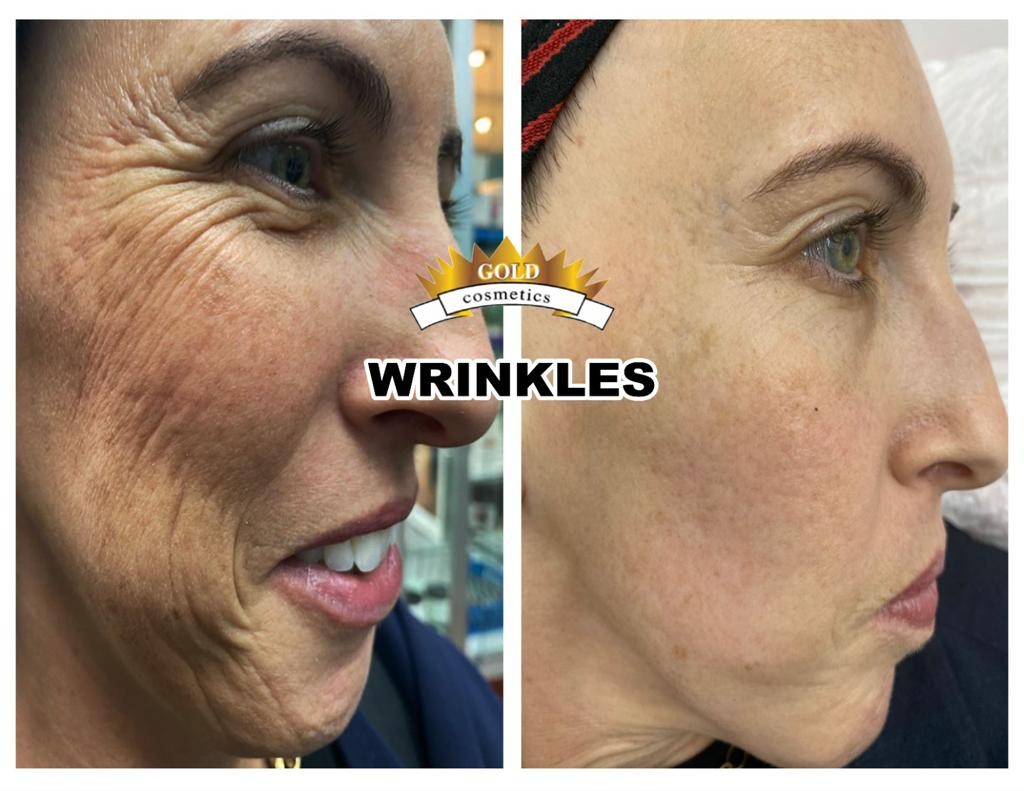
Niacinamide vs Vitamin C: Which Is Better for Uneven Skin Tone?
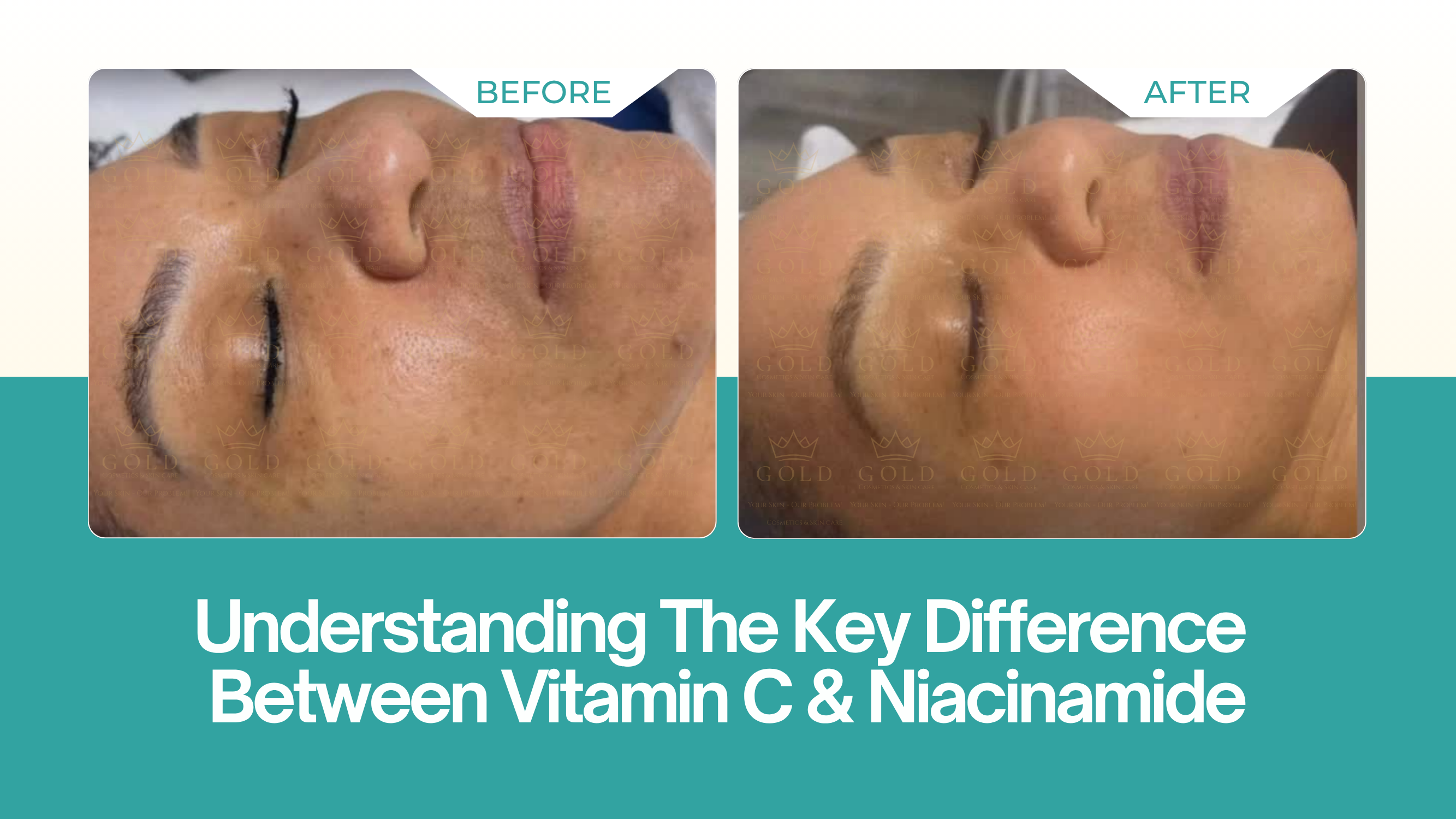
If maintaining flawless skin and even skin tone are your biggest concerns in skincare, you most likely must have heard about Vitamin C & Niacinamide. These two brightening agents are regarded as top choices when it comes to addressing factors that trigger uneven skin tones, such as skin blemishes, discoloration, hyperpigmentation marks, etc. From brightening dull skin to fading stubborn dark spots, these actives should be a priority for anyone seeking to maintain clearer skin. But here’s the problem: which one suits you based on your specific skin type or current skin condition, since using the actives can do your skin more harm than good.
These and more are what we’ll be covering in this blog post. Join us as we explore the key difference between vitamin C and niacinamide as crucial ingredients in targeting hyperpigmentation, dullness, and uneven skin tone. Don’t forget to get in touch with our experts on socials should you encounter any questions after reading this blog post. Now, let’s get down to business.
What is Vitamin C and How Does It Work?
When we talk about vitamin C in skincare, we’re mainly referring to L-Ascorbic Acid. This is the purest and most potent form of this vitamin. If used topically, it penetrates the epidermis to neutralize the effects of the damaging free radicals from the sun while offering several benefits like brightening. If these free radicals are left unchecked, they can trigger oxidative stress. Thereby, breaking down your skin’s DNA and structural proteins.
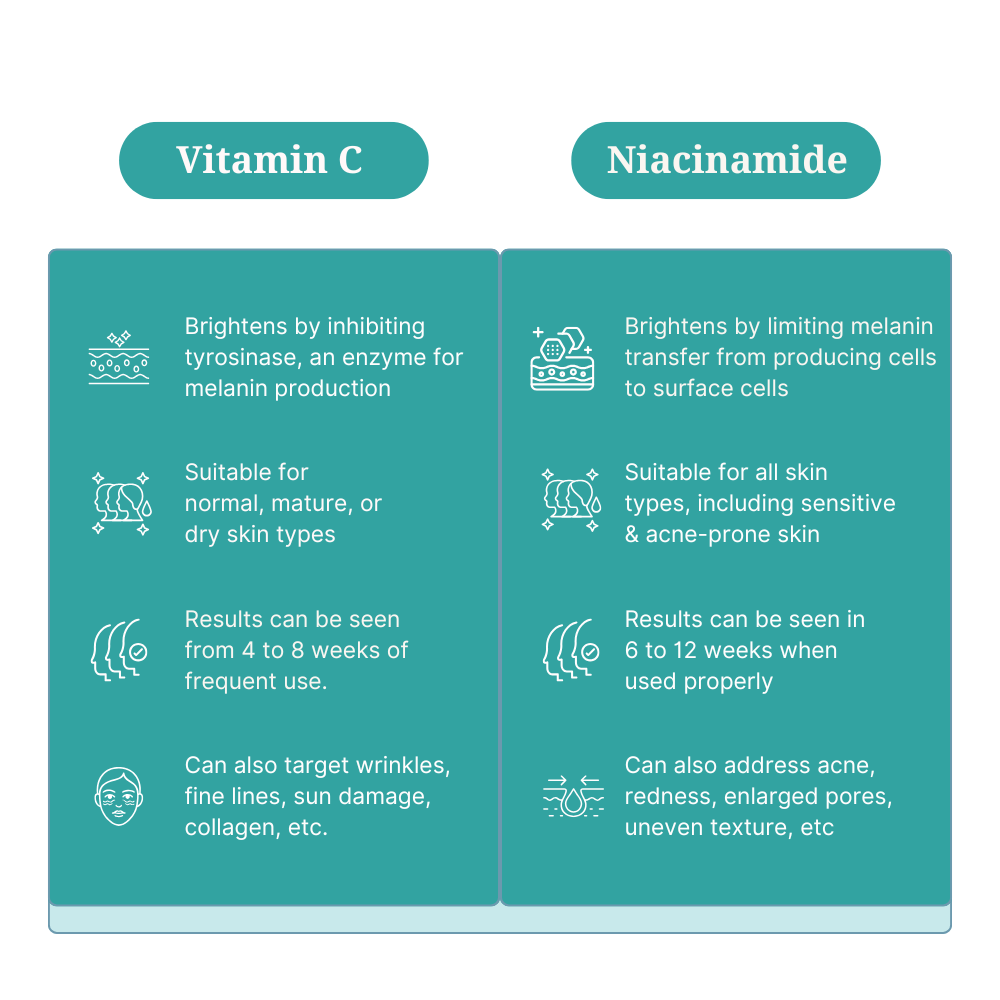
One may wonder: how does vitamin C specifically help in clearing hyperpigmentation and uneven skin tone? Get this – when your skin is excessively exposed to the sun, it triggers an overproduction of melanin, which is a natural pigment responsible for your skin color. When this excess melanin accumulates unevenly, it results in pigmentation marks like sunspots and dark spots on the affected areas. Introducing vitamin C helps to lessen this accumulation by significantly reducing the action of tyrosinase, an enzyme responsible for melanin production.
The only side note about vitamin C is that it can be unstable. It can easily oxidize if it’s not properly packaged and can trigger irritation on sensitive skin if it’s introduced too fast. But when it functions, the results can become noticeable within 4 to 8 weeks.
Other Benefits of Vitamin C
Aside from brightening dull, pigmented skin, vitamin C also offers other amazing benefits. Due to its numerous benefits, it’s regarded as one of the most in-demand ingredients in skincare. Let’s talk about the benefits.
-
Boosts Collagen Production
Vitamin C communicates with the responsible skin cells and activates the necessary enzymes to produce more collagen for a youthful appearance.
2. Reduces Wrinkles & Fine Lines
It also reduces wrinkles and fine lines by promoting collagen production and combating free radicals that can break down the existing collagen.
3. Soothe Inflammation
Vitamin C also possesses anti-inflammatory properties that can help calm redness and irritation while fastening the body’s wound-healing system.
What is Niacinamide and How Does It Work?
Also known as vitamin B3, niacinamide is popular due to its numerous benefits. Currently, it’s arguably regarded as one of the most versatile ingredients in modern skincare. Unlike retinoids or exfoliating acids, it doesn’t work by stripping the skin. Rather, it builds it up. Niacinamide first came to the limelight after it was discovered that it can promote the production of ceramides. These are the lipids responsible for gluing your skin cells together. If your ceramide levels are great, your skin barrier will most likely be strong and impermeable.
In terms of addressing hyperpigmentation and uneven skin tone, niacinamide works by blocking melanin transfer. When melanin is produced by the melanocytes, it stops the produced melanin pigments from traveling to the surface skin cells known as keratinocytes. This process prevents your dark spots or sunspots from becoming noticeable and finally fades them over time. Niacinamide also improves acne-prone skin and reduces the tendency of dark spots from appearing when that skin becomes irritated.
Unlike vitamin C, which attacks melanin production directly, niacinamide does not interfere. Hence, it can be used for long periods. Niacinamide is also a better option for sensitive skin since it doesn’t trigger irritation like vitamin C. Results from it can start showing from 6 to 12 weeks of consistent usage. Though niacinamide is generally mild, overusing it at higher concentrations can also trigger irritation.
Other Benefits of Niacinamide
Having established how niacinamide can be instrumental in clearing dark pigmentation marks, let’s explore the other incredible benefits it brings to the skin.
-
Strengthens Barrier
As we’ve earlier stated, niacinamide boosts ceramide, which is responsible for gluing skin cells together. It also locks in moisture to prevent damage.
2. Minimizes Pores
It prevents clogged pores and helps keep the pore linings clean and tight, thereby giving a smaller appearance.
3. Regulates Oil Production
This is another reason why niacinamide is a great option for acne-prone skin. It balances sebum production to unclog pores and reduce a shiny appearance.
Should You Use Vitamin C or Niacinamide?
Now that you’ve understood how these two transformative ingredients work, one may ask: should you use one over the other? In this context, there’s no competition. Both ingredients can significantly reduce hyperpigmentation and improve dull skin tone; it all depends on your skin type or current condition.
-
Choose Vitamin C If
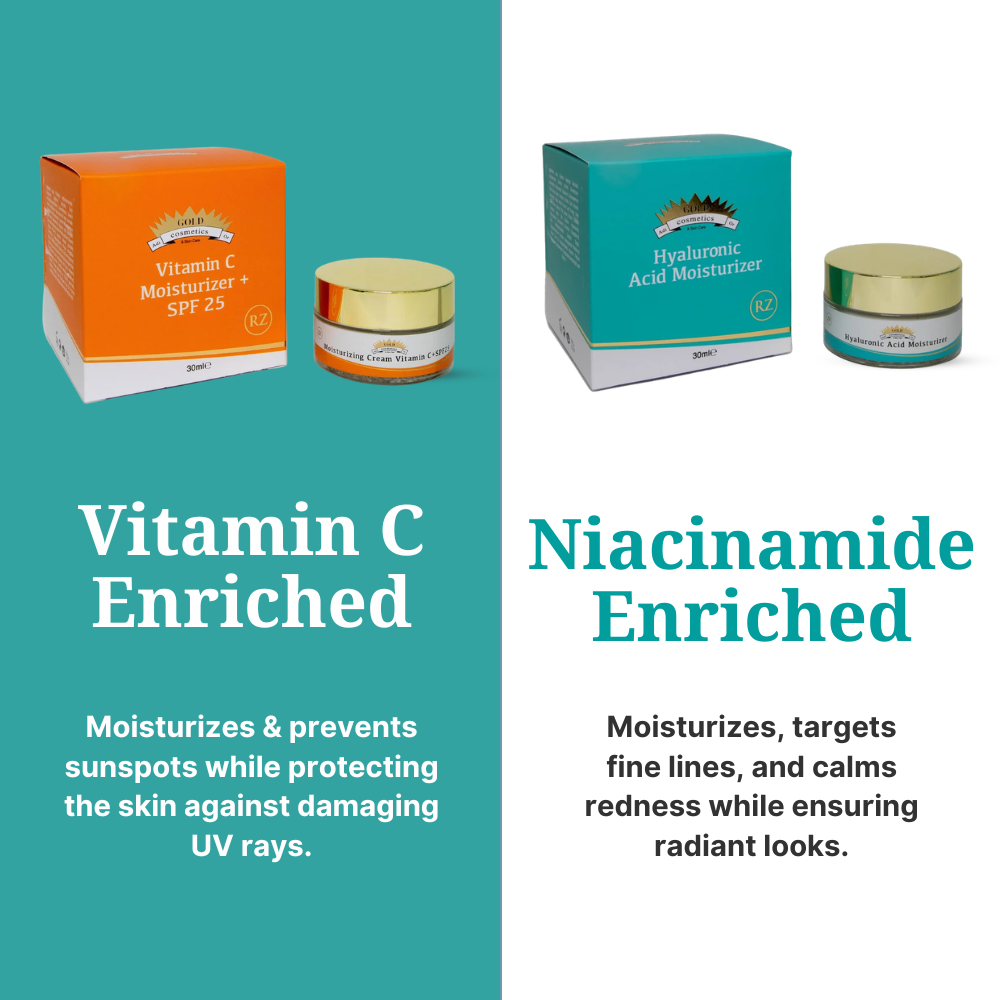
Choose vitamin C if you have normal, mature, or dry skin type that can tolerate or require aggressive protection against aging, dullness, and uneven skin tone. Hence, vitamin C-enriched formulas such as our Vitamin C Moisturizer + SPF 25 can be a great addition to your skincare regimen. This formula doesn’t just lock in moisture; it also protects against damaging free radicals.
2. Choose Niacinamide If
If you have acne-prone, oily, combination, or sensitive skin, using niacinamide can be a better option since it’s gentler compared to vitamin C. Hence, if your skin falls under this category, our Hyaluronic Acid Moisturizer & Whitening B3 for face could easily produce great results on your skin as they contain niacinamide. While whitening B3 removes spots from your face, Hyaluronic moisturizer locks in moisture to keep your skin barrier healthy.
3. Choose Both Ingredients If
Individuals with normal skin type can also use both ingredients in their routine. But if you must do that, consider splitting them to avoid possible irritation. For instance, you can use vitamin C in your morning routine to protect against damaging free radicals from the sun. Then, use niacinamide in your night-time skincare routine for barrier nourishment and repair.
Conclusion
As we’ve earlier established, vitamin C is great if you require faster results and if your skin can handle aggressive protection against sun damage, dullness, and uneven skin tone. On the other hand, niacinamide is a better option for long-term skin toning since it offers a milder effect. Hence, it’s a great option for individuals with sensitive skin. Irrespective of what you choose, never forget to use a broad-spectrum sunscreen like our Sunblock SPF 50. Taking this step will help prevent the effects of damaging UV rays that can trigger dullness, hyperpigmentation marks, and uneven skin tone issues.
Finally, we can’t end this blog post without reiterating the importance of consistent adherence to a quality skincare routine. Do you have a working skincare routine you follow? If yes, has it produced amazing results to you so far? If not, kindly click the button below to book our FREE consultation right away.
Not sure which kit is right for you? Click below to send us a photo of your skin issue for a free consultation
REAL PATIENTS, REAL RESULTS!