Is Your Skin Asking for Correction or Recovery?
Are you aware that rushing to adopt strong actives every time you experience a skin issue is not always the best? Yes! Not every breakout requires aggressive protocols, and not every blemish needs another active ingredient. Sometimes, the most effective treatment is to take a step back and support your skin to recover first. If you’re a beauty enthusiast, you must have heard about “skin correction” or “skin recovery”. While these two terms are both used interchangeably, they actually mean different things. Understanding their exact meanings and how they affect your skin is key if you want to avoid unnecessary irritation and maintain healthy skin.
So, if you’re interested. Kindly join us in this blog post as we take you through the real differences between skin correction and skin recovery, including their unique impacts on your overall skin health. And don’t forget to contact us if you have any questions. At Gold Cosmetics, we’re not just interested in your skin concerns; we also want to help you clear up your confusion. Now, let’s get down to business!
What Is Skin Recovery?
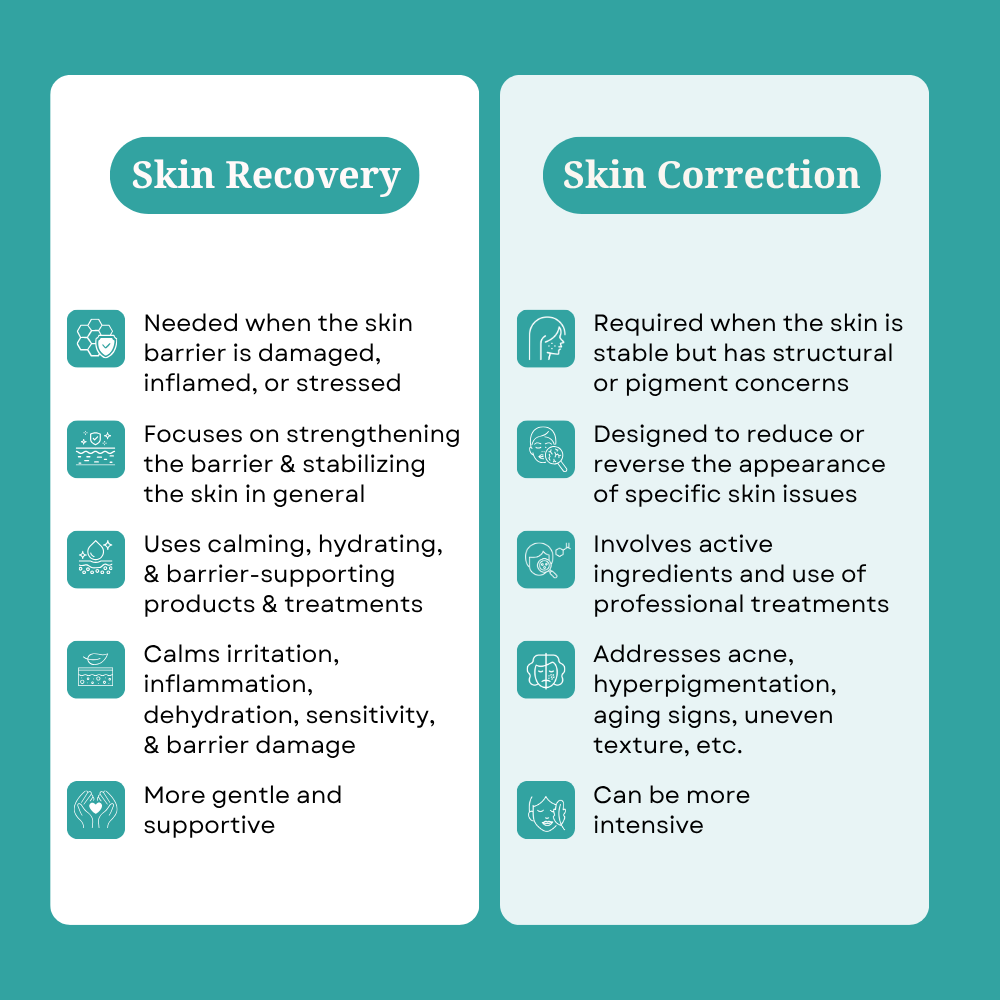
Skin recovery simply refers to the process of helping the skin return to its healthy and stable state after it has been stressed, irritated, dehydrated, or inflamed. Usually, the process largely focuses on the protective part of the skin, which is the skin barrier. Once the skin barrier is compromised, the skin can easily get irritated or inflamed at the slightest trigger. So, when a skin recovery approach is employed, the skin is subjected to treatments or habits that will repair the skin barrier, calm irritation, & sooth inflammation.
At this stage, the client may be advised to prioritize hydrating ingredients, such as hyaluronic acid, or barrier-repair ingredients like ceramides to support their skin barrier and keep their skin less vulnerable to external irritants. Another approach is to limit exfoliation or intensive skincare procedures, especially if they’re beginning to strip or irritate your skin. Adopting these activities can help the skin to gradually regain its resilience and tolerance level to external conditions.
Signs Your Skin Might Need Recovery
Imagine continuing to overload your skin with strong actives when you’re supposed to allow it to recover first. To avoid making any mistakes, here are the possible signs you might encounter if your skin is yearning for recovery.
-
Sudden or Increased Sensitivity
Whenever a product you’ve been using for a long time suddenly starts causing redness or irritation, that’s a sign something is wrong. Sometimes, you may be dealing with a compromised skin barrier, or the formula is becoming too aggressive on your skin.
2. Excessive Flaking or Dryness
Another huge sign to watch out for is excessive dryness. If your skin needs recovery, you may notice dryness, peeling, or tightness even after using a hydrating serum or moisturizer. At this stage, your skin experiences persistent flaking or roughness that won’t smooth out no matter how hard you try.
3. Irritation & Textural Changes
If you’re beginning to develop small, itchy bumps that are different from the usual acne, it might be time to reassess your skin. You may also notice your skin looks rough, shiny but dry, and fine lines are becoming more visible even when you’re consistent with your moisturizer.
4. Burning and Stinging Sensation
Another popular way is to perform a sting test. Whenever you apply a simple, plain moisturizer or even get splashed with water and notice a sting or burning sensation. This might be a sign that your skin barrier is compromised and you need to pay attention to restoring it to its healthy state.
5. Unexplained Redness & Inflammation
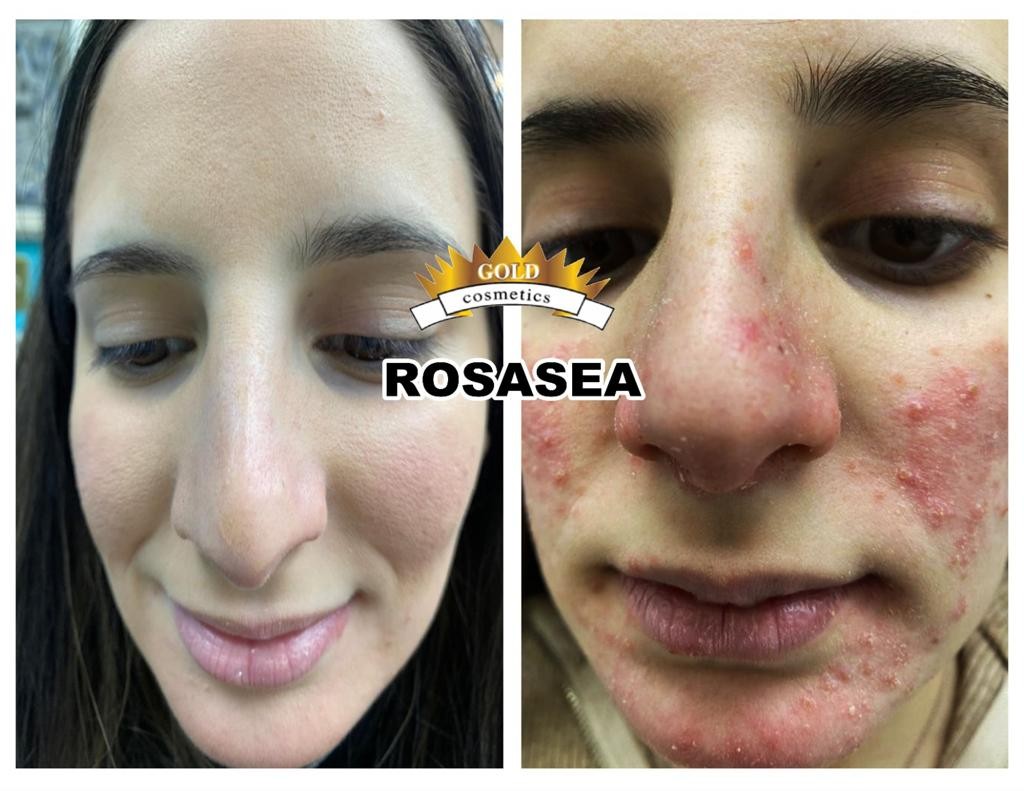
Unlike acne inflammation, you may notice generalized redness around your forehead, cheeks, or entire face while you’re not breaking out. Unfortunately, these symptoms may worsen with temperature changes or after cleansing your skin. One possible culprit for this situation is barrier damage.
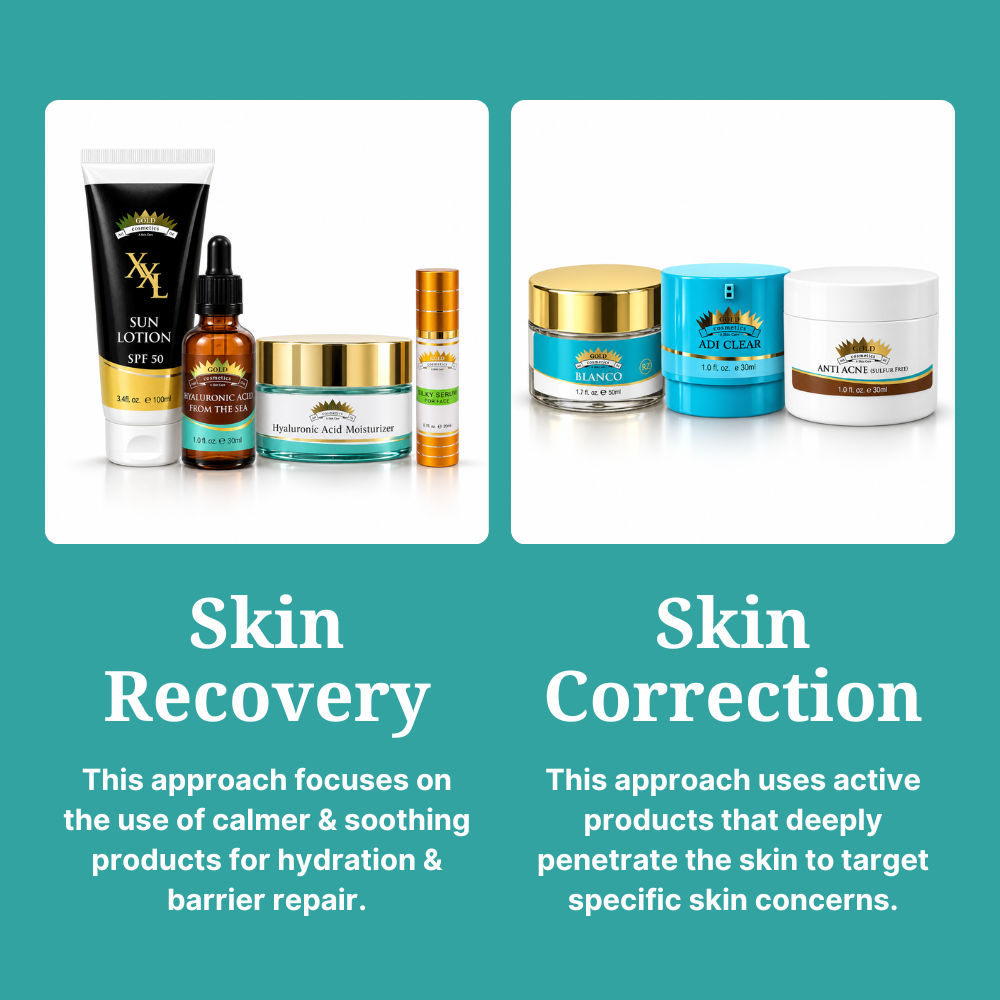
To remedy this situation if you already find yourself in it, we recommend pausing all active ingredients and switching to a simpler routine. If you’re experiencing flaking or dehydration, hydrating formulas such as our Hyaluronic Acid Serum or Silky Serum for lighter hydration might be a good option. Limit exfoliation and focus on ceramide-rich formulas for barrier repair. And finally, don’t forget to use your Sunblock SPF 50 every morning.
What is Skin Correction?
On the other hand, skin correction is the process of using targeted skincare actives or professional treatment to address a specific skin concern. Unlike skin recovery, which mainly focuses on generally stabilizing or strengthening compromised skin, skin correction actively improves an identified skin problem using a stronger method with the hope of achieving a measurable result. At this stage, the use of advanced techniques like laser, chemical peels, microneedling, PRP treatments, and exosomes might be employed. Skin corrections penetrate the skin at a deeper level to reverse or reduce the appearance of a particular issue rather than focusing on the overall well-being of the skin.
In essence, if you have a specific or diagnosable skin problem that doesn’t improve with the basic skincare routine, skin correction should be the right approach. In this situation, we highly recommend booking our professional consultation so you don’t make mistakes with your treatment. Some of the major reasons why people experience recurring skin concerns are wrong diagnosis and incorrect treatments. Some skin concerns resemble each other, and it’s a huge error to address them with unsuitable actives.
Common Signs Your Skin Needs Correction
Once your skin is stable and resilient, you can then go ahead to correct the underlying concerns. Here are some of the common skin problems that may be addressed through a corrective skincare approach.
-
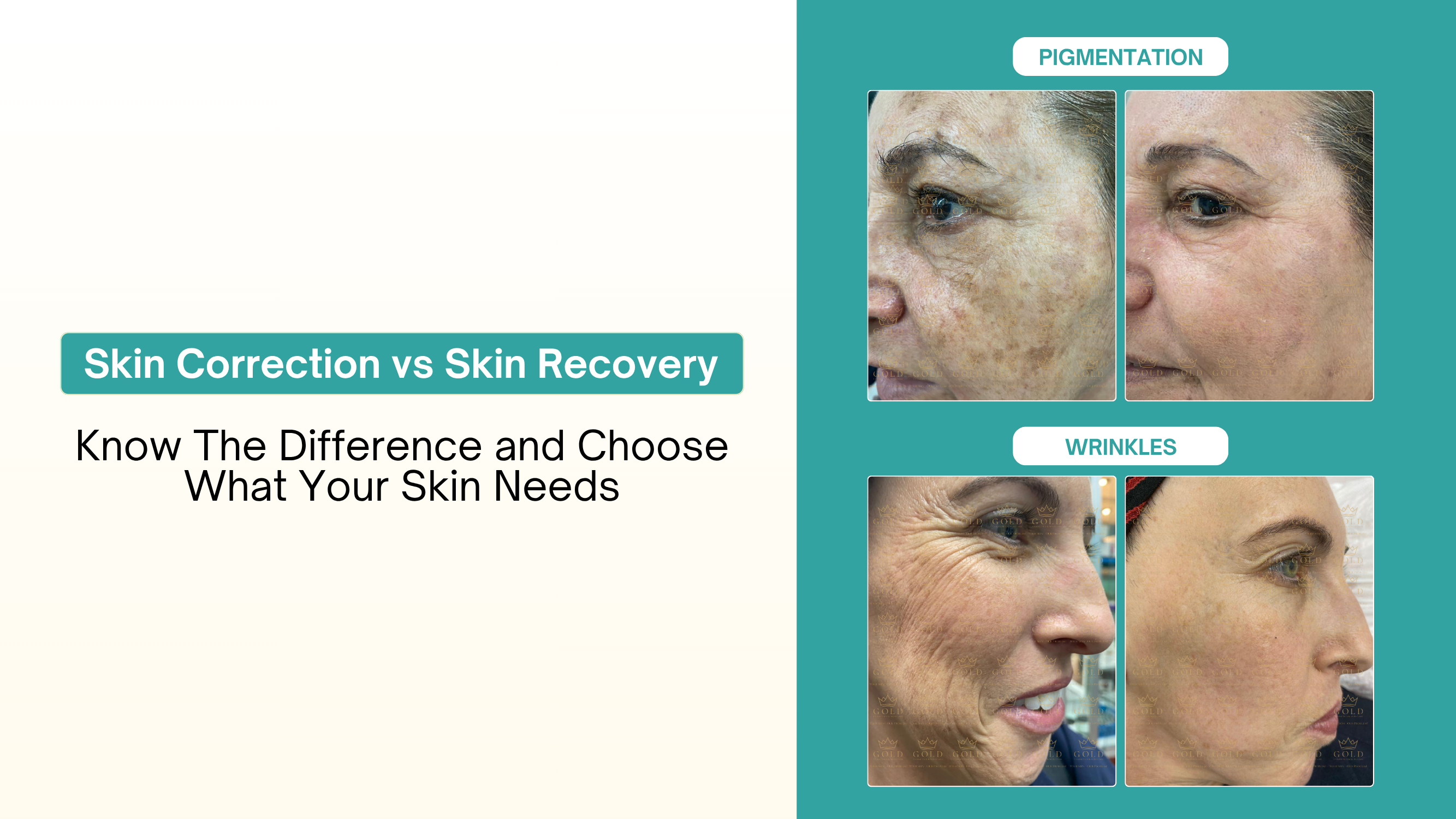
Hyperpigmentation & Dark Spots
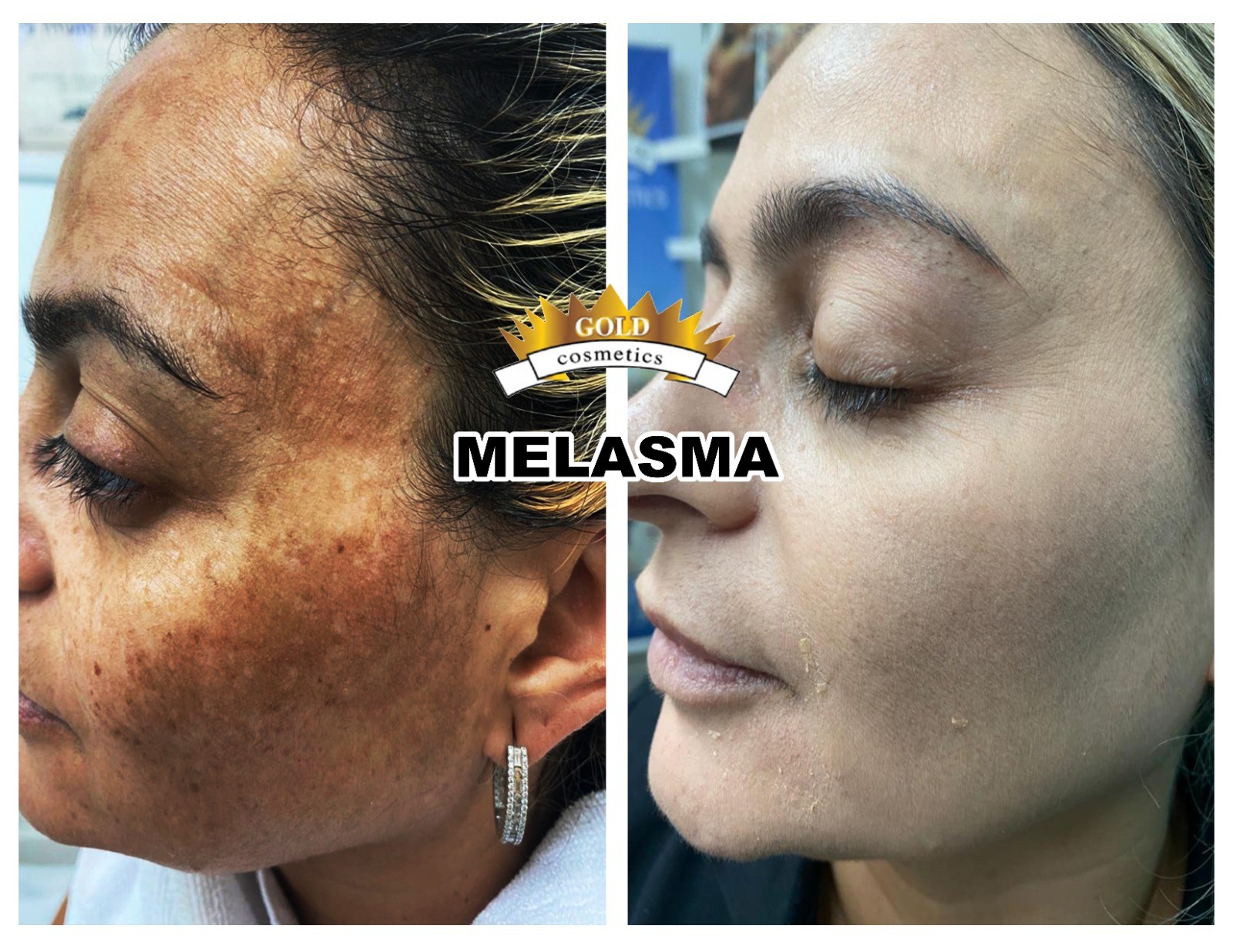
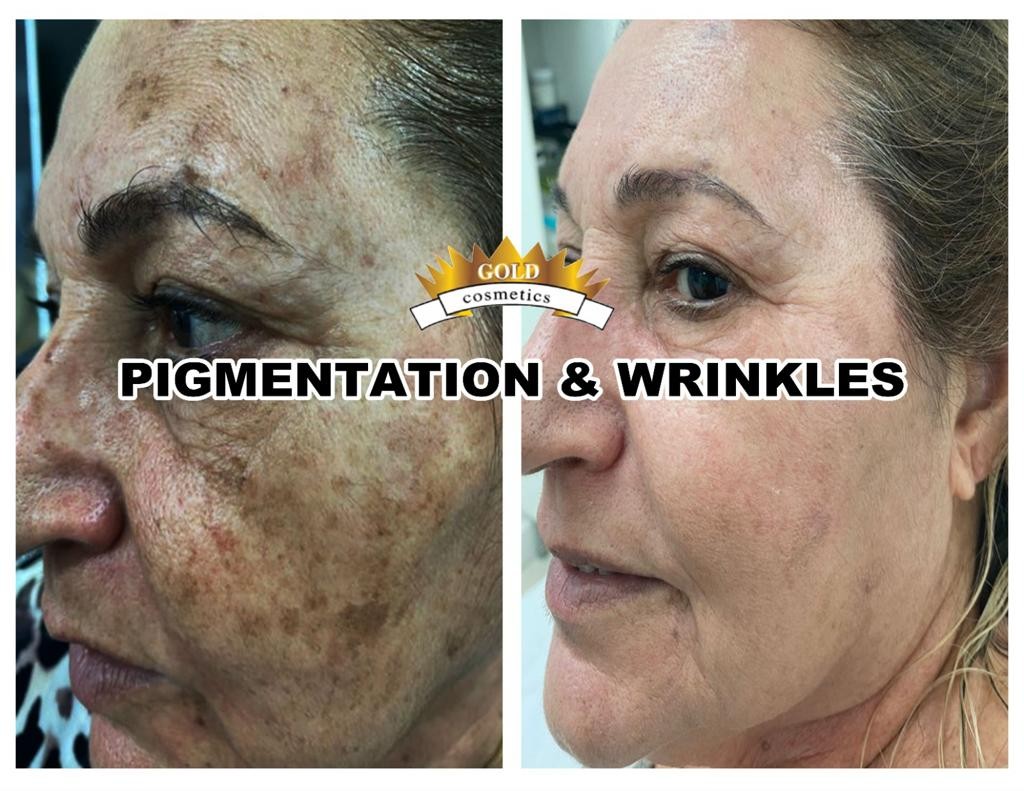
As you may have known, this is triggered by overproduction of melanin, the natural pigment responsible for our skin tone, hair, and eye color. It can be triggered by UV exposure, injury, inflammation, hormonal fluctuations, certain medications, etc.
2. Acne Breakouts
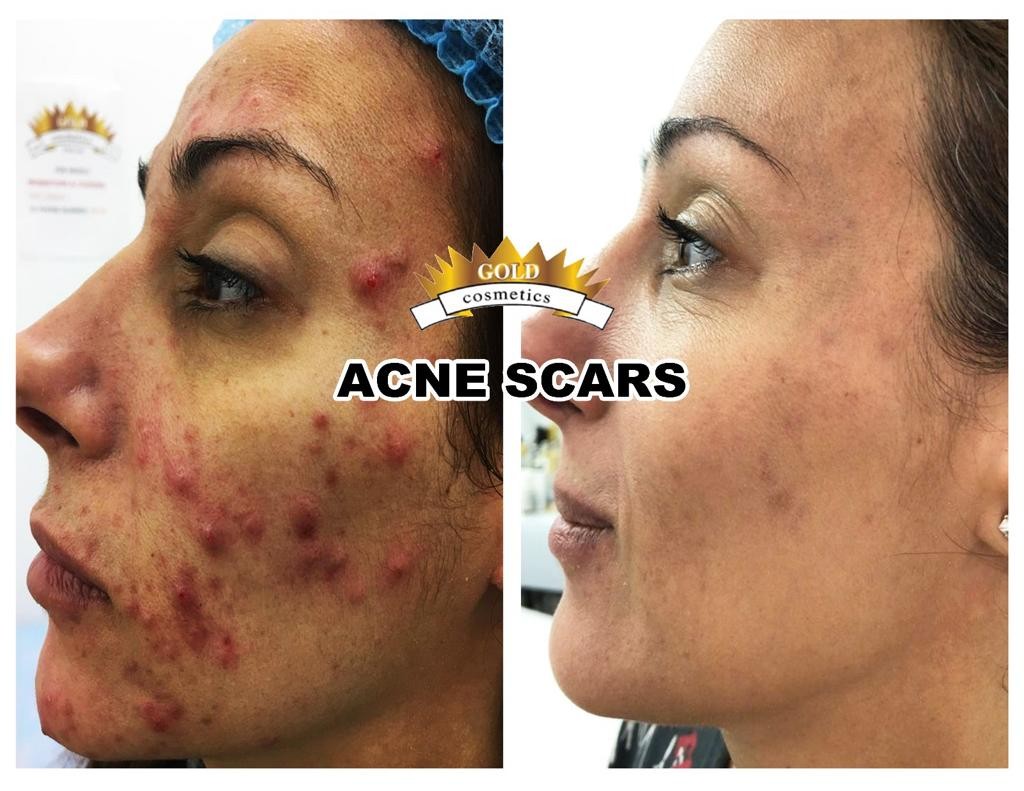
This is quite common amongst people. Acne develops when the pores get clogged with excessive oil or dead skin cells. When bacteria are involved, it may lead to redness and swollen, inflamed bumps, which can be painful.
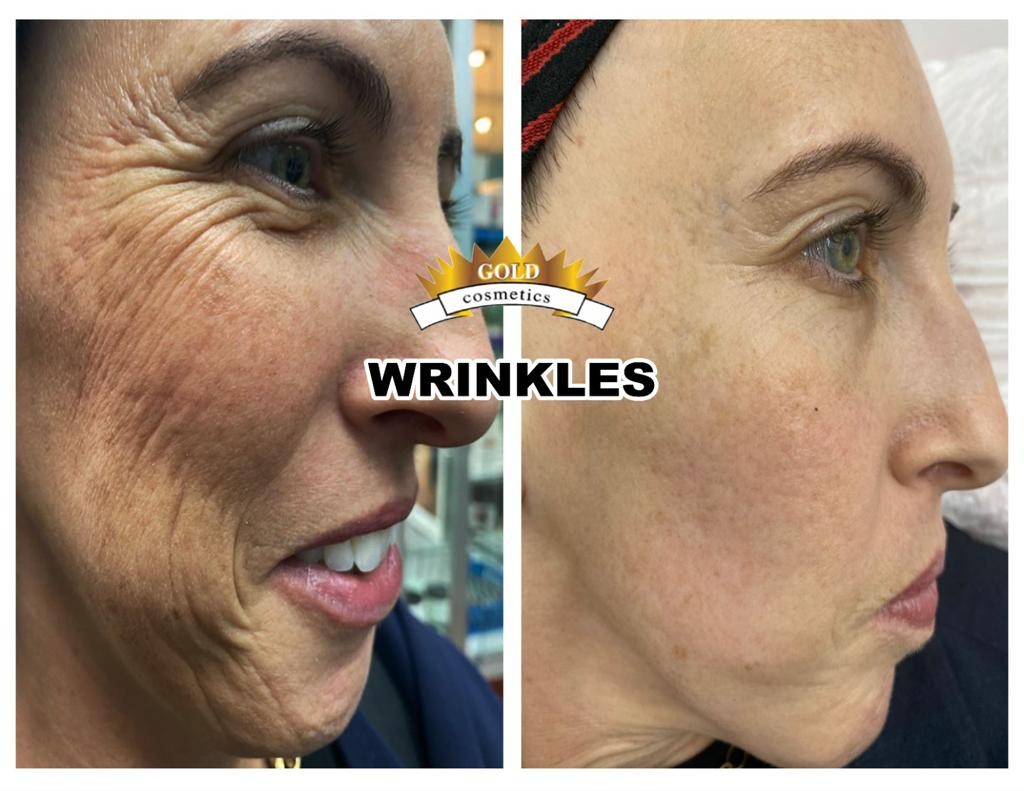
3. Fine Lines & Wrinkles
These skin issues are mainly caused by the breakdown of collagen and elastin, which are responsible for keeping the skin firm and tight. While the aging process may be natural, it can also occur prematurely due to external factors or unhealthy habits like poor skincare, smoking, UV exposure, etc.
4. Certain Post-Acne Scarring
You might need skin correction if you develop scarring after healing from acne. Usually, acne scarring is triggered when the skin tries to heal from an inflammation or injury that damaged the skin at a deeper layer. While trying to heal from this damage, the skin might overproduce collagen to form indentations or scars.
5. Sun Damage & Uneven Skin Tone
As the name implies, sun damage is primarily triggered by prolonged exposure to UV rays from the sun, especially if you’re also not using sunscreen. While uneven skin tone may also be caused by UV exposure, issues like post-inflammatory hyperpigmentation (PIH), hormonal changes, the aging process, and skin irritation may also play a role.
If you find yourself in this situation and your skin is stable, you can reintroduce targeted corrective actives, such as salicylic acid as found in our Anti-Acne Cream. If you’re struggling with dullness, aging, & uneven skin tone, consider trying our Blanco Cream. For severe hyperpigmentation problems, our Bleach Cream should be the right direction, while Adi Clear focuses on fading all appearances of dark spots. But we recommend gradually introducing these actives, so you don’t push your skin back into a state of recovery.
Conclusion
As we’ve earlier stated, not all breakouts or skin concerns require aggressive treatments. Sometimes, it might be a sign your skin needs recovery. Your skin may be craving recovery if you start noticing signs like redness, burning, tightness, peeling, heightened sensitivity, irritation, etc. Skin recovery is a necessary preparatory step before an aggressive treatment, especially if the skin is unstable. It can also be introduced after certain professional treatments, depending on the procedures or the client’s skin response. On the other hand, skin correction is designed to target a specific skin concern with the purpose of reversing or reducing its appearance.
But if you’re not certain of what your skin needs at the moment, kindly click the button to book our FREE consultation. Usually, the best treatment starts with a proper diagnosis, and this is what you get to experience in your first appointment with us. We look forward to having you around. Let’s connect today!
Not sure which kit is right for you? Click below to send us a photo of your skin issue for a free consultation
REAL PATIENTS, REAL RESULTS!