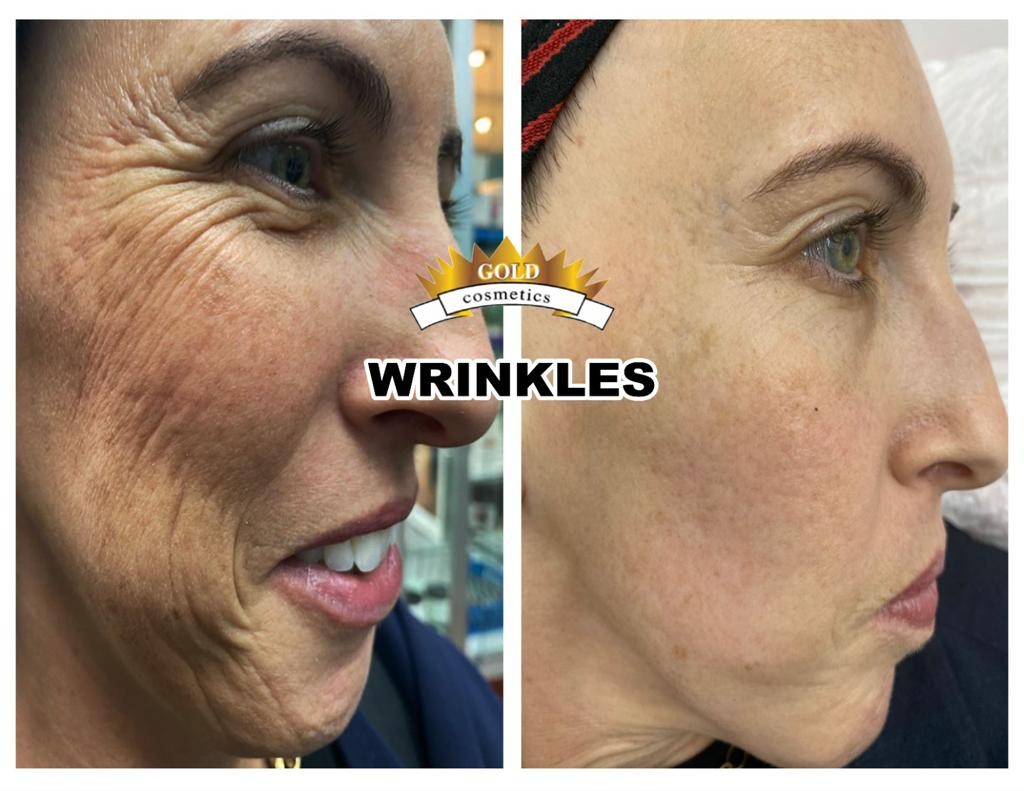
How To Deal with Menopausal Skin Changes
For most women, approaching menopause can be tough due to the transformative changes it has on the body. These changes extend beyond the reproductive system to hormonal levels that affect almost every organ in the body, including the skin. At this phase, some women may experience skin dryness, changing texture, loss of firmness, uneven tone, or breakouts as if they’re back to their teens. Consequently, making them assume they need more aggressive skincare to restore their youthful glow, such as more acids, more peeling, more retinol, more resurfacing, etc. Are these actually the right approach?
Understanding how menopause affects your whole-body system and not just your skin is key to maintaining a radiant glow. So, join us in this blog post as we expose you to the science behind menopause, how it impacts your skin, and what you can do to sustain those youthful sparks. Meanwhile, don’t hesitate to book our FREE consultation if you encounter any questions in the course of reading this blog. We’re here to help.
Now, let’s get down to business!
What Is Menopause and How Does It Affect the Skin?
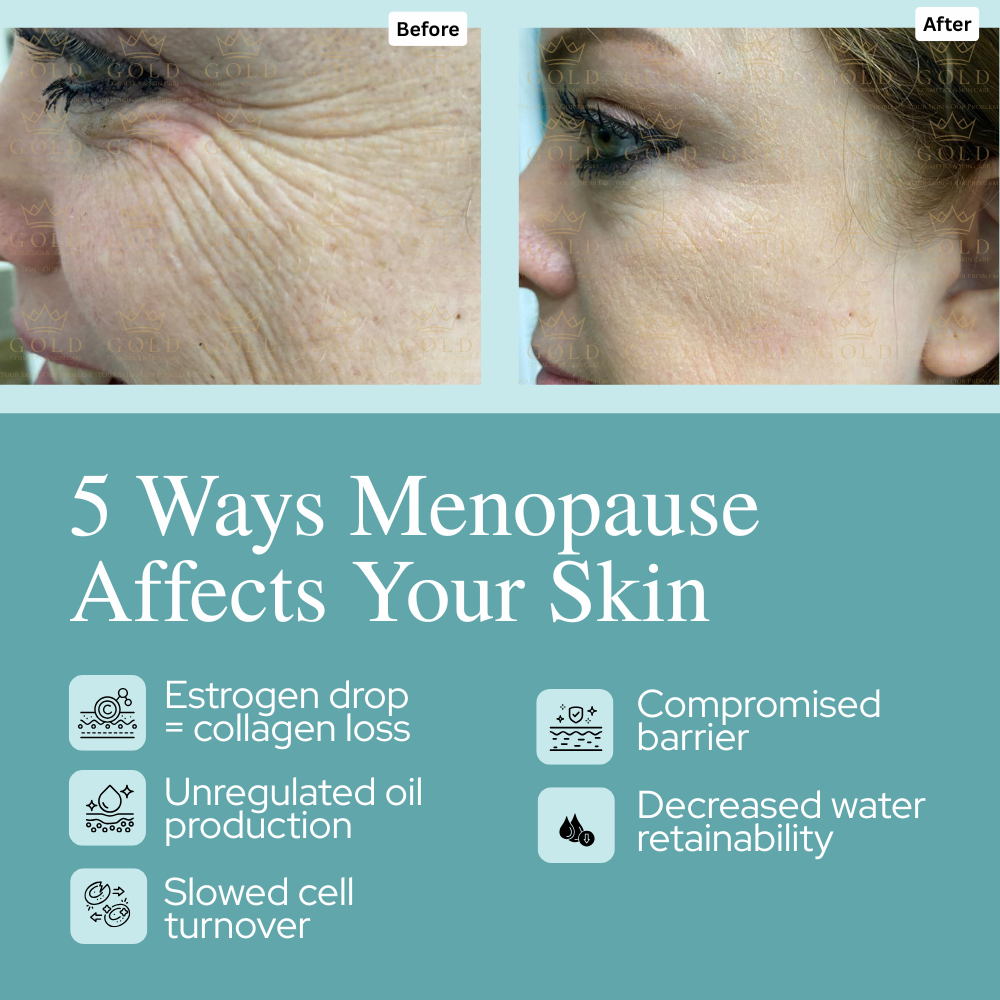
Menopause is a natural biological phase that marks the permanent end of a woman’s menstrual cycles and fertility. During this process, the body experiences a significant drop in a reproductive hormone known as estrogen. Apart from not experiencing periods for 12 consecutive months, this drop alongside the accumulated effects of sun exposure causes noticeable changes on the skin, such as dryness, loss of elasticity, hydration, wrinkles, fine lines, age spots, etc.
Now, one may ask – how does a reproductive hormone affect the skin at this level? Get this! Though estrogens are responsible for menstrual cycles, they still play a major role in collagen production for both men and women. During menopause, a woman’s body produces less of it, thereby affecting the collagen levels. This depreciating collagen level negatively impacts the skin’s structure and ability to retain moisture. At this stage, you may experience dry and easily irritated skin with a higher probability of developing aging signs like fine lines and wrinkles.
How to Address Menopausal Skin Changes
Now that you’ve understood how menopause impacts the skin, let’s talk about the right skincare approaches to manage these changes. Though they are natural, there are still ways you can improve them to boost the quality of your skin.
1. Skin Dryness
As we’ve already established, a drop in collagen levels common with menopause affects the skin barrier and its ability to retain moisture. This compromised barrier makes the skin dry, flaky, and more sensitive to external irritants.
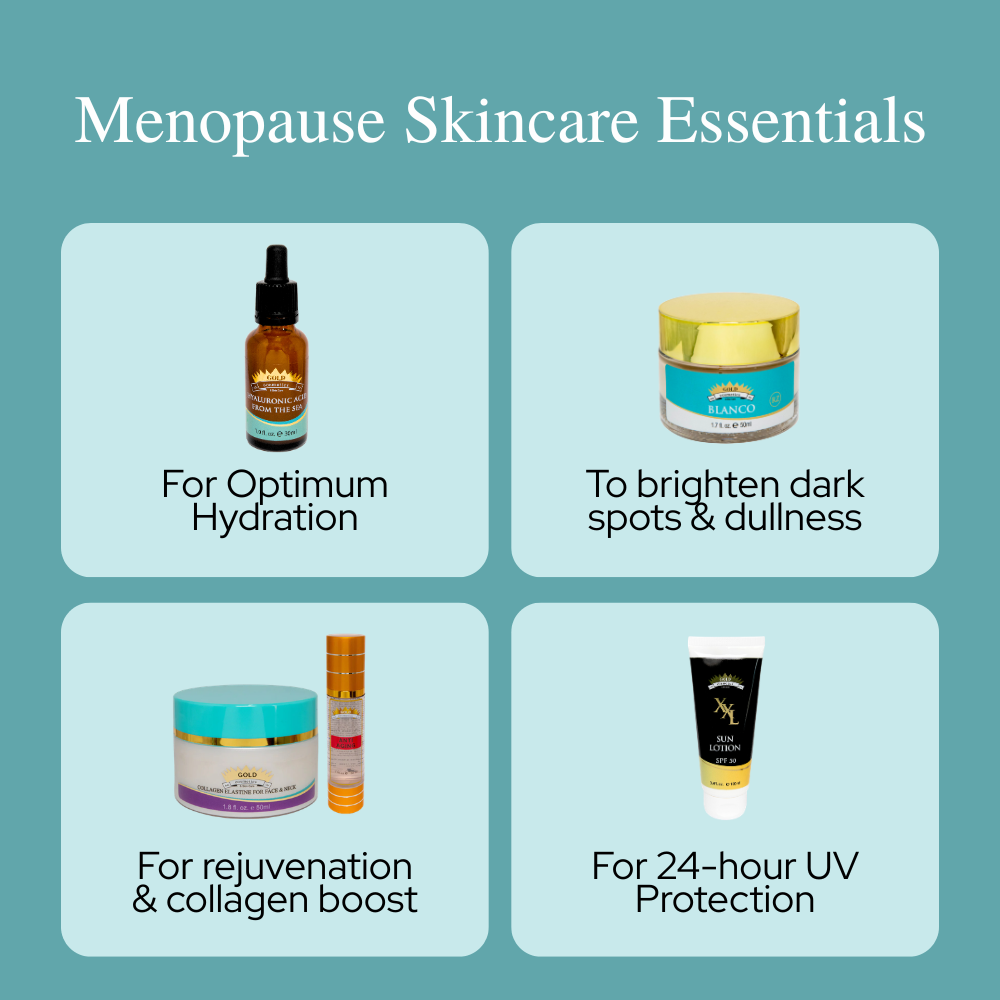
To salvage this situation, consider adopting formulas rich in hyaluronic acid, such as our Hyaluronic Serum & Hyaluronic Acid Moisturizers. This humectant ingredient will help hydrate and plump your skin for a more reinforced barrier and supple feeling. Since your skin is more sensitive, go for lukewarm baths instead of hot showers to avoid stripping your skin of its natural oil.
2. Age Spots & Uneven Skin Tone
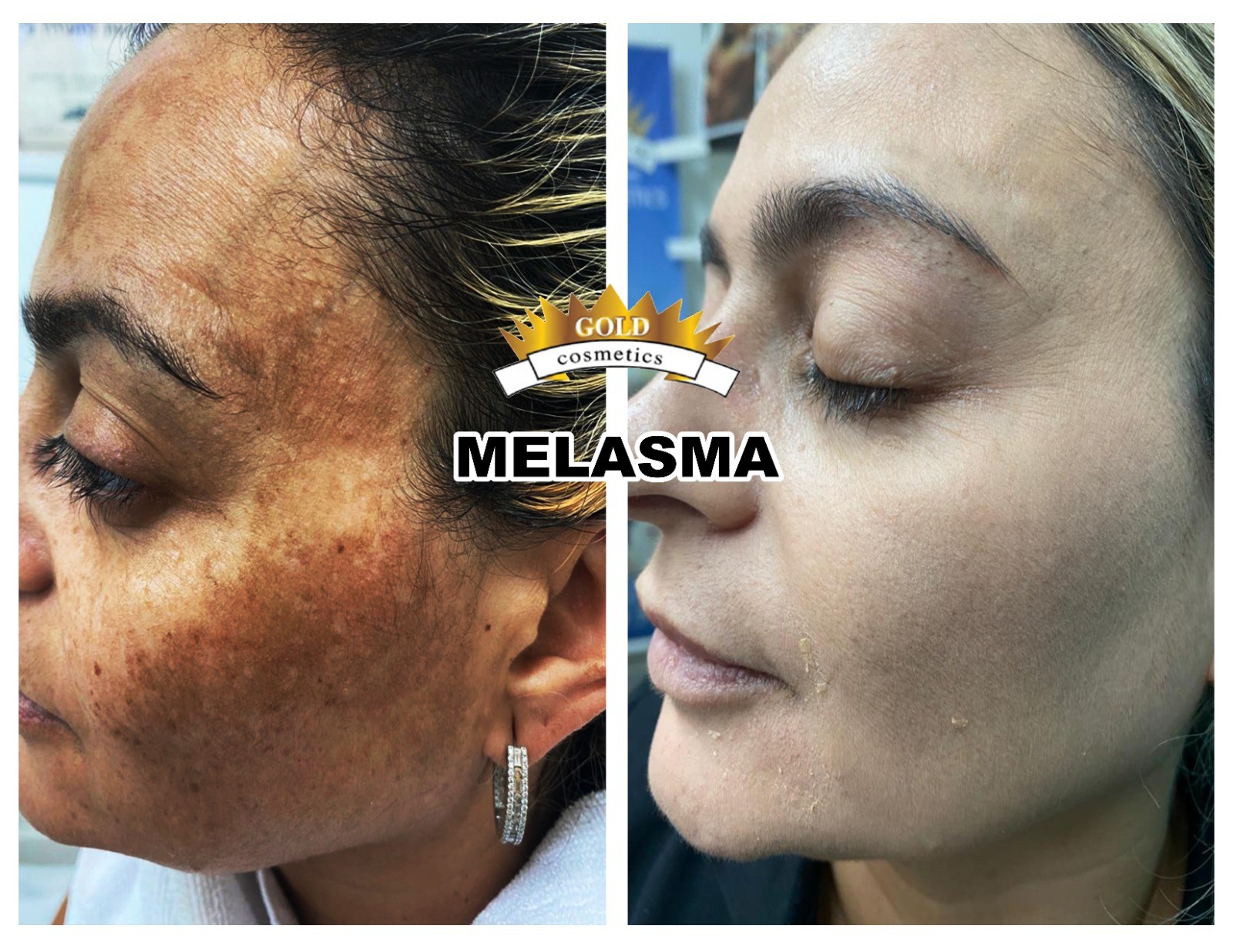
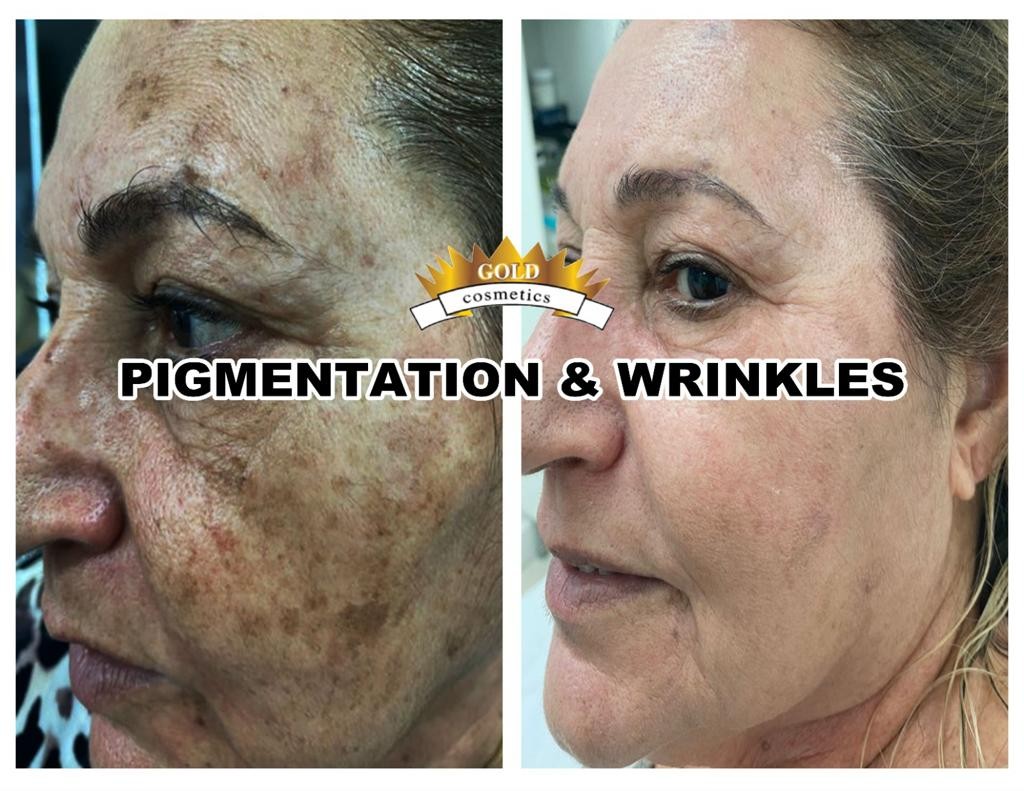
Aside from reproduction, estrogen also helps in regulating melanin production. A drop in this hormone during menopause can cause the melanin-producing cells to become overactive, thereby leading to dark patches and uneven skin tone. Furthermore, the accumulated effects of sun exposure can also add more to the situation.
To target the resulting dark marks, look for nourishing formulas that contain niacinamide, such as our Blanco Cream. This active ingredient will help brighten your mature, dull skin and significantly reduce the appearance of the pigmentation marks for a more even complexion. In case of severe pigmentation, consider exploring our Adi-Bleach-Shoval.
3. Fine Lines & Wrinkles
While these are naturally common with aging, a drop in estrogen levels affects collagen production, resulting in loss of elasticity, wrinkles, and fine lines. As you already know, collagen immensely contributes to our skin’s structural support. Once it’s depleted, the skin loses its firmness and tightness, giving room for a saggy look.
In this situation, pay more attention to anti-aging formulas that don’t just nourish your skin but also rejuvenate it by boosting your collagen levels. Since sagging first appears around the face & neck, we recommend exploring our Collagen Elastine for Face & Neck. For more refined, youthful looks, also try our Anti-aging Serum.
4. Sensitivity & Hormonal Acne
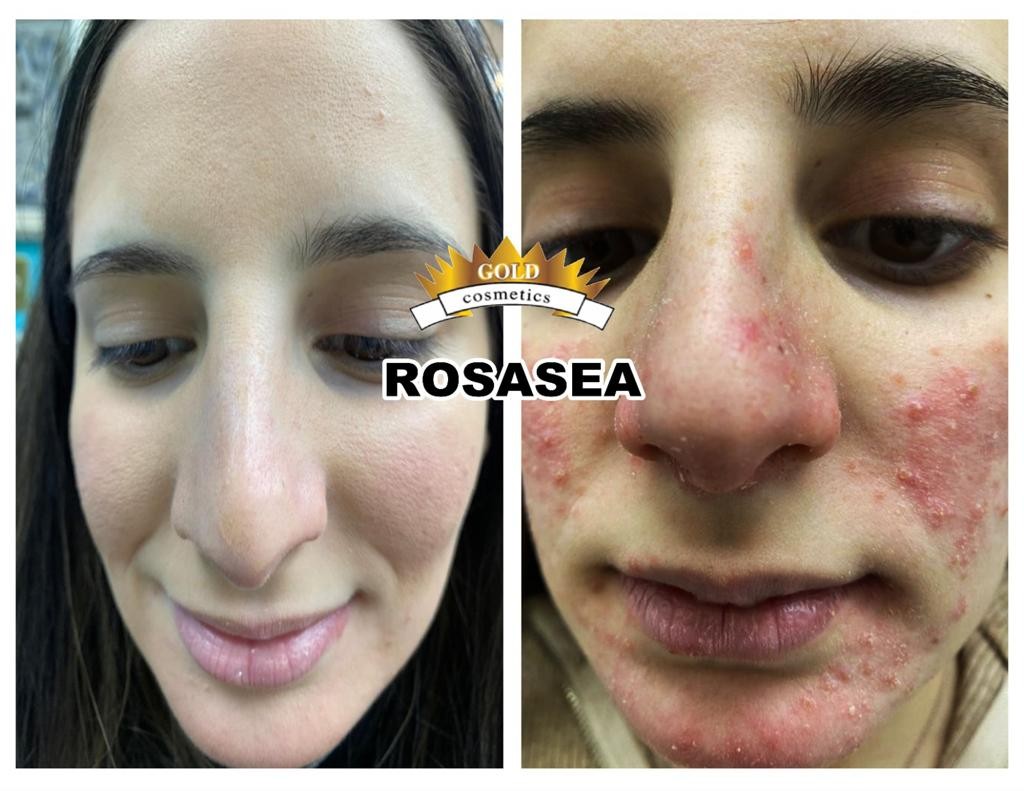
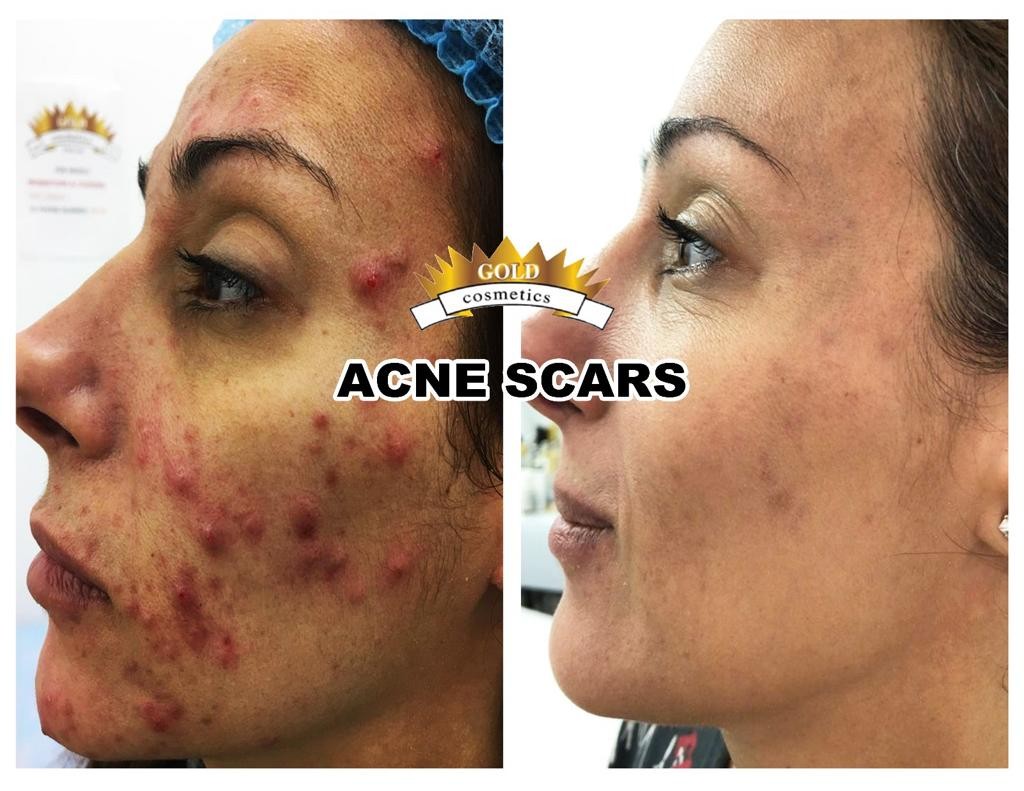
Apart from heightened sensitivity due to compromised barriers, failing estrogen levels can cause relatively increased male hormones like testosterone. This process can trigger an overactive sebaceous gland, causing clogged pores and acne, mostly around the jawline and neck.
To avoid this situation, only use non-comedogenic moisturizers that won’t clog your pores. Also, adopt only gentle cleansers like our Bleach Cream Soap, which is void of harsh chemicals that could further irritate your skin. But if you’re already experiencing inflammatory skin during menopause, kindly book an appointment to connect with licensed professionals.
Conclusion
Looking good during menopause is dependent on lifestyle choices, skincare habits, and state of mind. Some of these healthy lifestyle choices include quality diets, drinking enough water, always using sunscreen, good sleep, sufficient exercise, and so on. While adopting these habits, still remember that aging is natural and menopause is part of the whole process. So, regardless of how your skin might have changed, never forget to feel good about yourself.
Finally, if you need a more personalized skincare routine to navigate this phase, kindly click the button below to connect with our experts one-on-one. At Gold Cosmetics, we prioritize your skin satisfaction over anything else. Why don’t you connect with us and resume your skin transformation journey today? We’re just one click away.
Not sure which kit is right for you? Click below to send us a photo of your skin issue for a free consultation
REAL PATIENTS, REAL RESULTS!