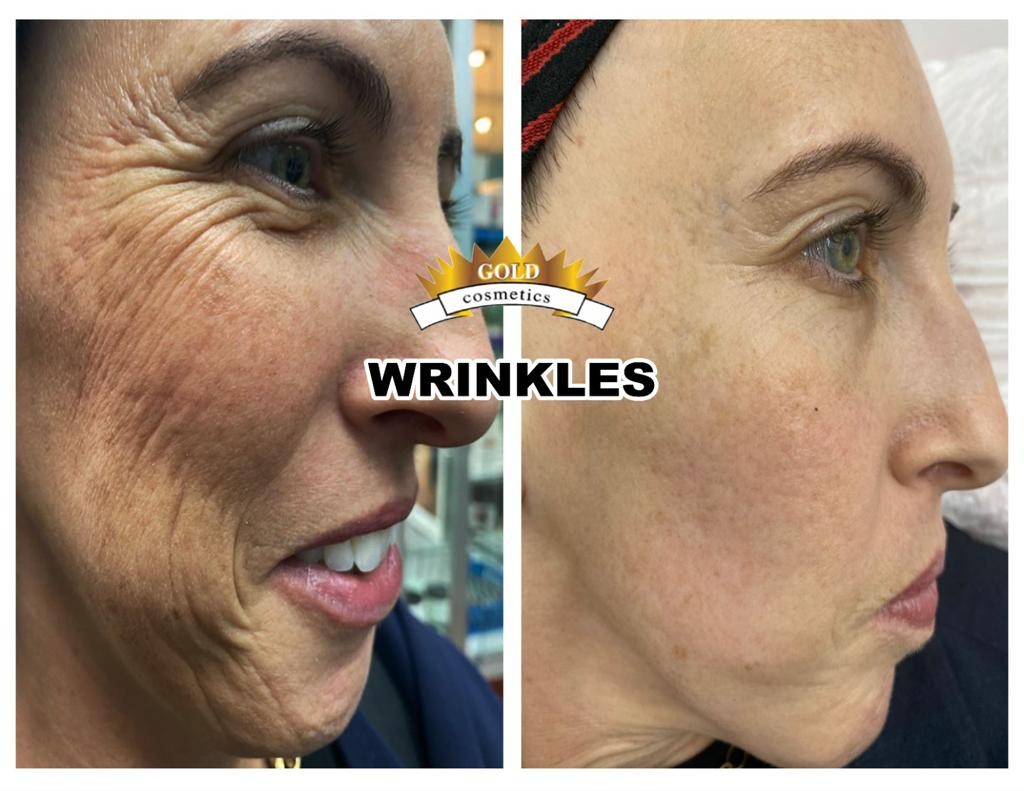
Collagen vs Elastin: What’s The Difference?
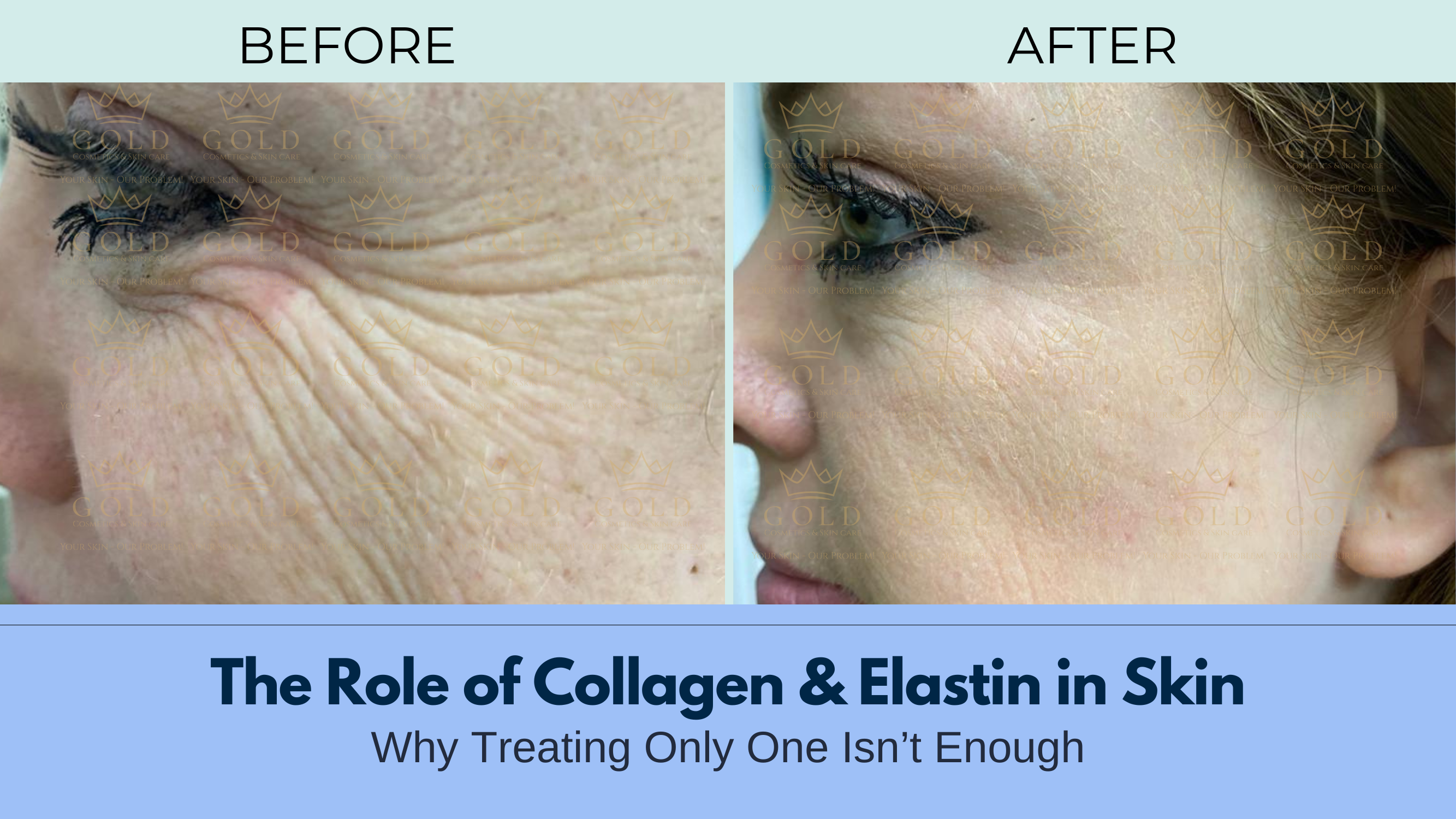
Yes! We all want to revive that firm and radiant skin we had during our teenage years to reflect how young we feel inside. Unfortunately, wishes don’t always make reality. Our ability to rejuvenate our youthful skin depends on two powerful proteins: collagen and elastin. These vital structural components play huge roles in maintaining our skin’s firmness, elasticity, and resilience. So, if looking ever sweet-16 is your skincare goal, understanding the difference and connection between collagen & elastin in the skin should be your first step towards bringing that dream into manifestation.
In this blog post, our aim is to help you differentiate and establish a link between these two structural proteins. Discover how they impact your skin health, aging process, and overall structure. Meanwhile, don’t forget that Gold Cosmetics & Skin Care remains your best beauty brand for addressing all kinds of skin problems, including anti-aging issues. If you’re struggling to rekindle that youthful spark in your skin. We can help. Simply get in touch with us after reading this blog. Now, let’s get down to it!
What are Collagens In Skin?
Collagen represents the most abundant protein in our body. Hence, it forms about 75% of our skin’s dry weight. Its primary function for the skin is to provide structure, strength, and firmness. Within the dermis are specialized cells known as fibroblasts. These cells are responsible for producing collagen. During our younger years, these fibroblasts are very much active in generating new collagens to replenish the ones we lost through tears and wear. Unfortunately, this regeneration process starts to slow down gradually once you enter your late 20s. Over time, this decline causes the skin to lose its tightness, strength, or plumpness.
At this declining stage, you may start noticing slightly visible fine lines and wrinkles, which become much more noticeable over the years. Once the collagen fibers begin to break down, your skin loses its support and firmness. At this point, your skin will become saggy with uneven texture and less elasticity. It’s worth noting that the skin contains about 28 different types of collagens. Type I collagen is most commonly found in our skin tissues.
What is Elastin In Skin?
On the other hand, elastin is the protein responsible for our skin’s elasticity. It essentially gives the skin the ability to stretch and return to its original shape. Naturally, elastin is about a hundred times more flexible than collagen. Formed from tropoelastin molecules that cross-link to form elastic fibers, it allows the skin to accommodate movements, temporary stretching, and facial expressions without permanent damage. For context, elastin fibers are like tiny rubber bands; they continuously expand and contract to maintain our skin’s flexibility and resilience.
Apart from flexibility, elastin also promotes skin texture and smoothness. Unlike collagen, it is much harder to rebuild. Our body tends to produce less of it after we exceed puberty. And once it breaks down, it’s difficult to regenerate. Aside from aging, other factors that can hasten its decline include sun exposure, smoking, and environmental irritants. At this depleting stage, the skin will start becoming loose, saggy, and less supple, and can be hard to bounce back to its original shape when stretched.
The Difference Between Collagen & Elastin
Now, we’ve established what collagen and elastin mean and their individual roles. Let’s talk about their distinctive natures and how they affect the skin. We’ll be addressing these differences in various categories.
1. Structural Difference
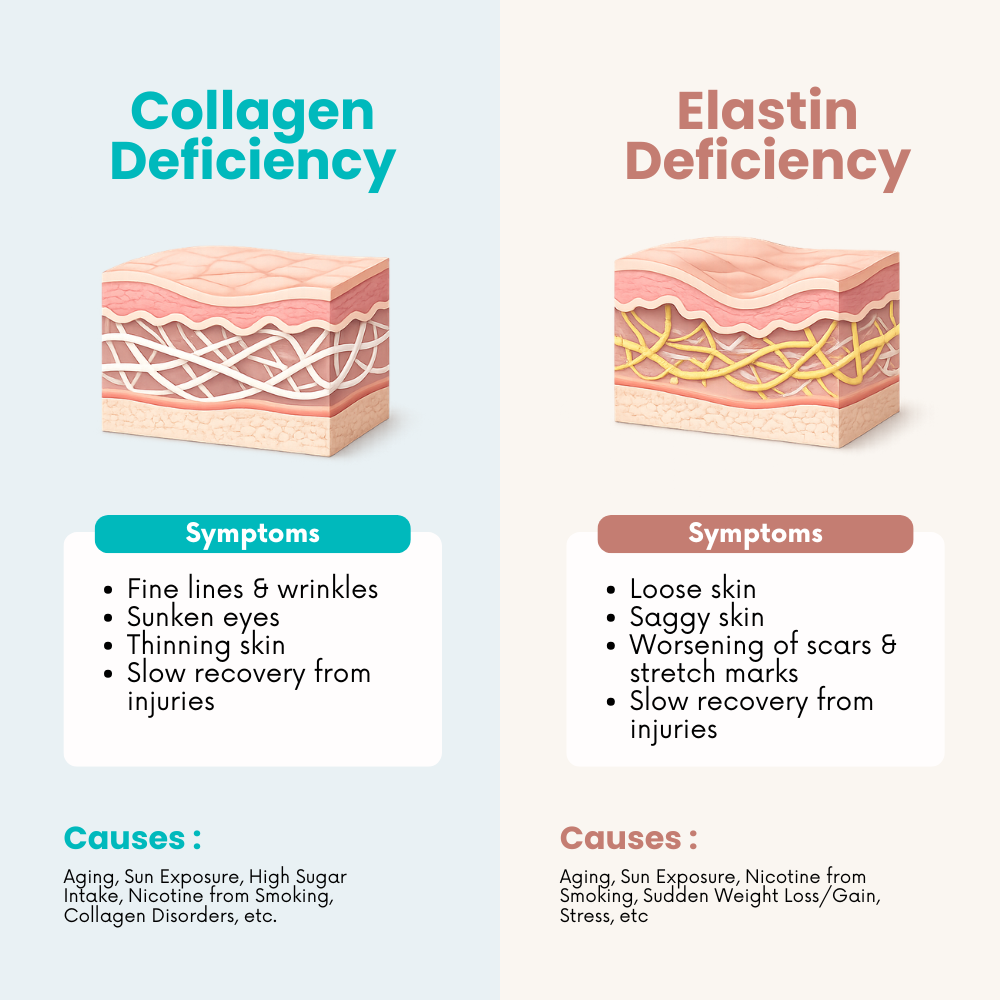
Collagen has a rigid triple helix structure, which provides strength and stability. While elastin possesses a coiled structural feature for stretch and flexibility. Collagen appears whitish, whereas elastin exhibits a yellowish color due to its amino acid components.
Based on life span, collagen tends to regenerate throughout one’s life, though the production declines with age. On the other hand, elastin is mainly synthesized during childhood and fetal developmental stages, with less formation after puberty.
2. Benefits to The Skin
As we’ve stated earlier, collagens are mainly responsible for our skin firmness, strength, and density. As long as your collagen level is adequate, your skin remains thick and dense with a smooth texture. Furthermore, collagen also promotes skin hydration by supporting the skin’s ability to retain water. It also supports wrinkle reduction by filling up the spaces between skin cells for a more plumped appearance.
In comparison, elastin facilitates the skin’s elasticity. This protein gives the skin the ability to stretch and bounce back to its original position without permanently forming creases or losing areas. Its adequate presence prevents saggy skin that’s often prevalent with aging. Also, elastin contributes to the skin’s resilience against environmental stressors.
3. Production Decline
Once collagen production starts slowing down, you may notice visible fine lines, thinning, and lost firmness. At this point, the skin becomes fragile and may take a longer time to heal from minor injuries. Whereas, elastin depletion comes with saggy skin, reduced flexibility, and deep wrinkles with repeated folds.
Environmental factors, such as UV exposure, pollution, smoking, and a poor skincare lifestyle, trigger this breakdown, leading to premature signs of aging. However, if you’re already at this crossroads, consider replenishing your skin with our Collagen Moisturizer & Collagen Elastin for Face & Neck. These rejuvenating formulas are designed to boost the depleted collagen or elastin levels in targeted areas of your skin.
How Collagen and Elastin Work Together
Generally, collagen and elastin form the basic foundation of a youthful skin. Collagen provides the support and firmness needed, while elastin provides resilience and flexibility. When both proteins are at sufficient levels, the skin appears smooth, plump, and lifted. However, if either one of them is depleted, your skin’s regeneration process loses its rhythm. Hence, you will notice fine lines, wrinkles, lost elasticity, and other signs of aging skin.
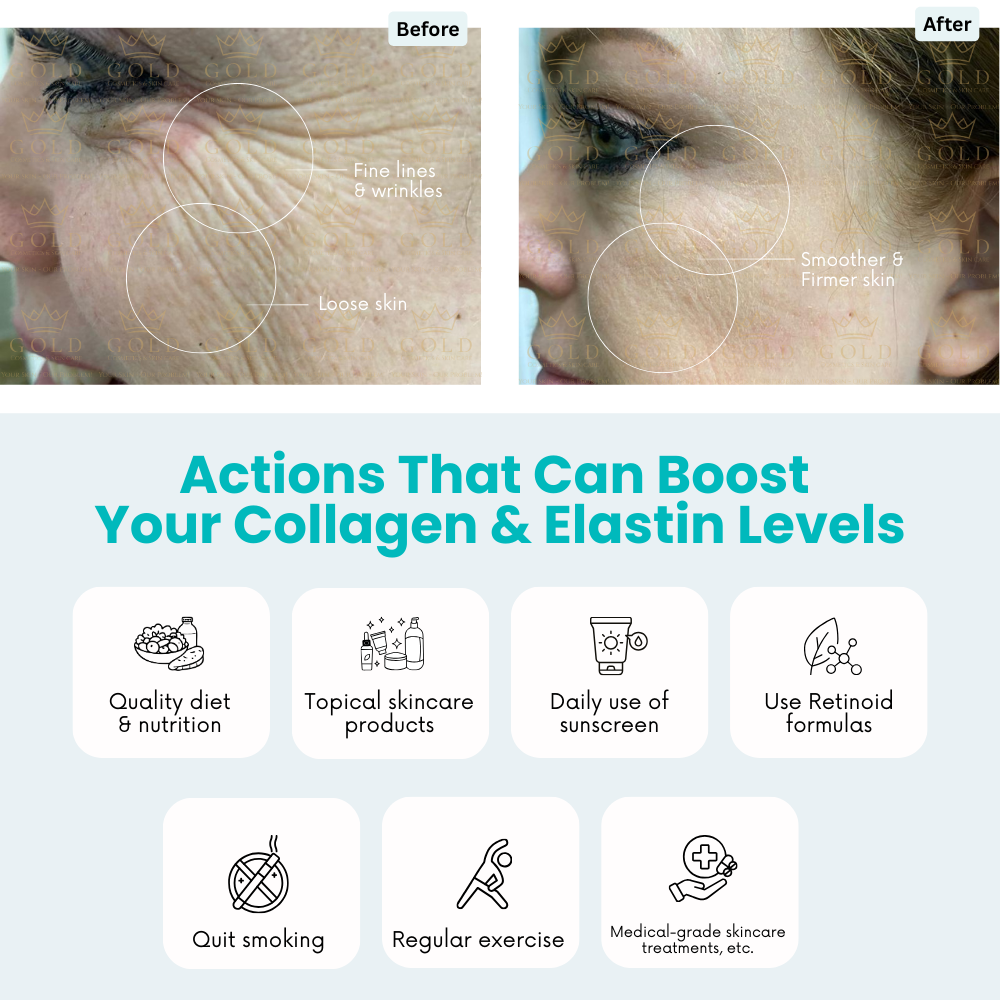
Both collagen and elastin require fibroblasts. That’s why maintaining active fibroblasts through quality skincare lifestyles is crucial to looking ever youthful. Besides, you can’t treat one and leave the other. Both proteins need to be at adequate levels at all times. Actions that can maintain your elastin and collagen level include: using daily Sunblock SPF 50, using rejuvenating formulas like our Carisma Active, maintaining a healthy diet, consistent hydration, regular exercise, and so much more.
Conclusion
Understanding the different roles of collagen and elastin enables you make informed decisions in your anti-aging skincare journey. While collagen offers structural support, elastin promotes resilience and flexibility. That entails the skin requires both proteins to maintain its youthful and healthy look. As we earlier listed, consistency in quality skincare and lifestyle habits can help preserve your skin’s youthful appearance over time. Think of this as a long-term investment in your skin because a little effort can go a long way in keeping your collagen & elastin levels strong.
Remember to get in touch with us if you don’t have a personalized skincare regimen to follow. You can simply click the button below or message any of our social media handles. We’d be happy to help.
Not sure which kit is right for you? Click below to send us a photo of your skin issue for a free consultation
REAL PATIENTS, REAL RESULTS!