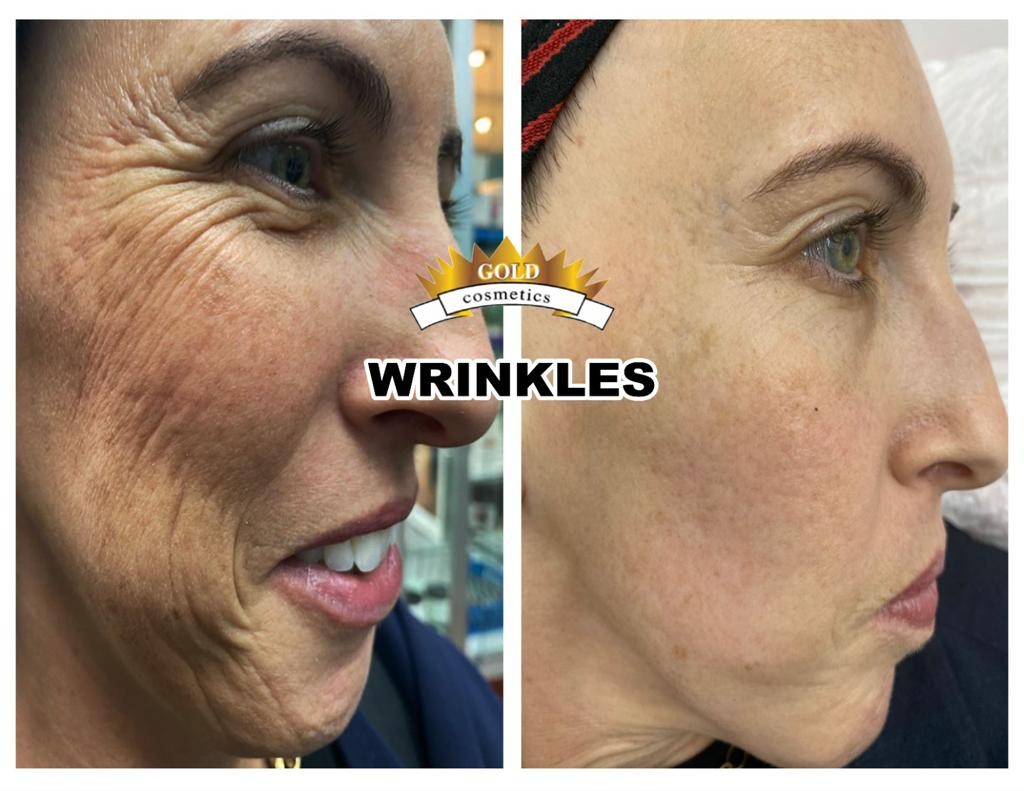
Arbutin vs Hydroquinone: Which Is Better for Hyperpigmentation?
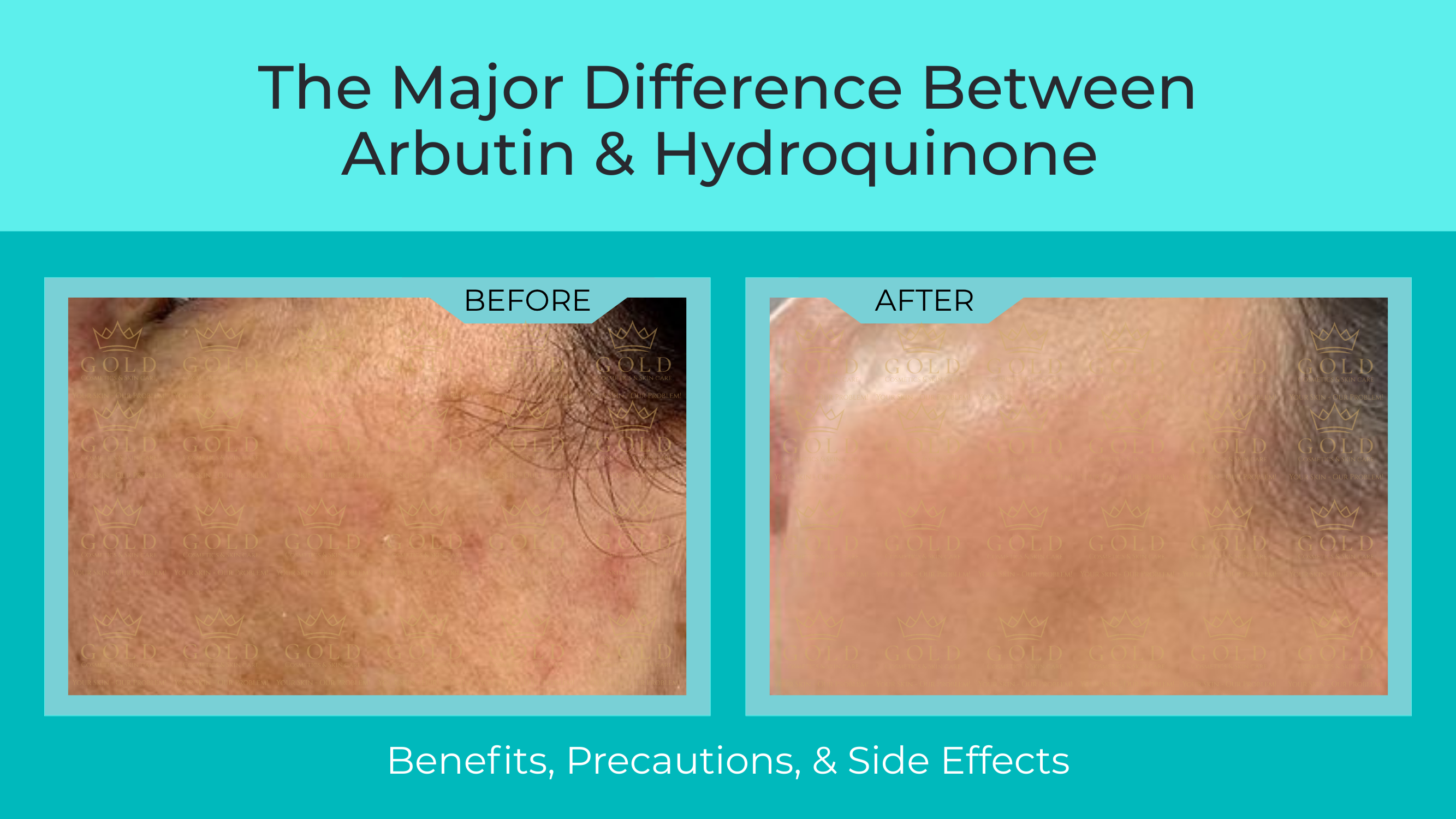
As far as tackling dark spots or hyperpigmentation marks is concerned, two major ingredients remain at the top of the list – Arbutin & Hydroquinone. While both offer a promising hope for brighter and more even skin complexion, they achieve this in different ways. That also includes their possible side effects on your skin. Understanding the distinctive nature of these two skin-lightening actives will help you make the right decision when it comes to eliminating dark spots, uneven skin tone, & hyperpigmentation marks on your skin.
So, whether you’re dealing with melasma, sun damage, post-acne marks, or pigmentation, this blog post is definitely for you. Join us as we deep-dive into the major difference between these two ingredients (arbutin & hydroquinone), how they brighten the skin, their possible side-effects, and the precautions you need to take. Don’t forget to ask our experts online in case you encounter any questions in the course of reading this blog post.
What is Hyperpigmentation?
Before we get into the main subject of this blog, let’s briefly talk about hyperpigmentation and its triggers. In the simplest terms, hyperpigmentation is a condition where portions of the skin become darker than the surrounding area due to overproduction of the melanin pigment, responsible for our skin color. Typically, this condition can appear as dark spots or patches and is commonly triggered by sun exposure, acne scarring, hormonal changes, or skin aging.
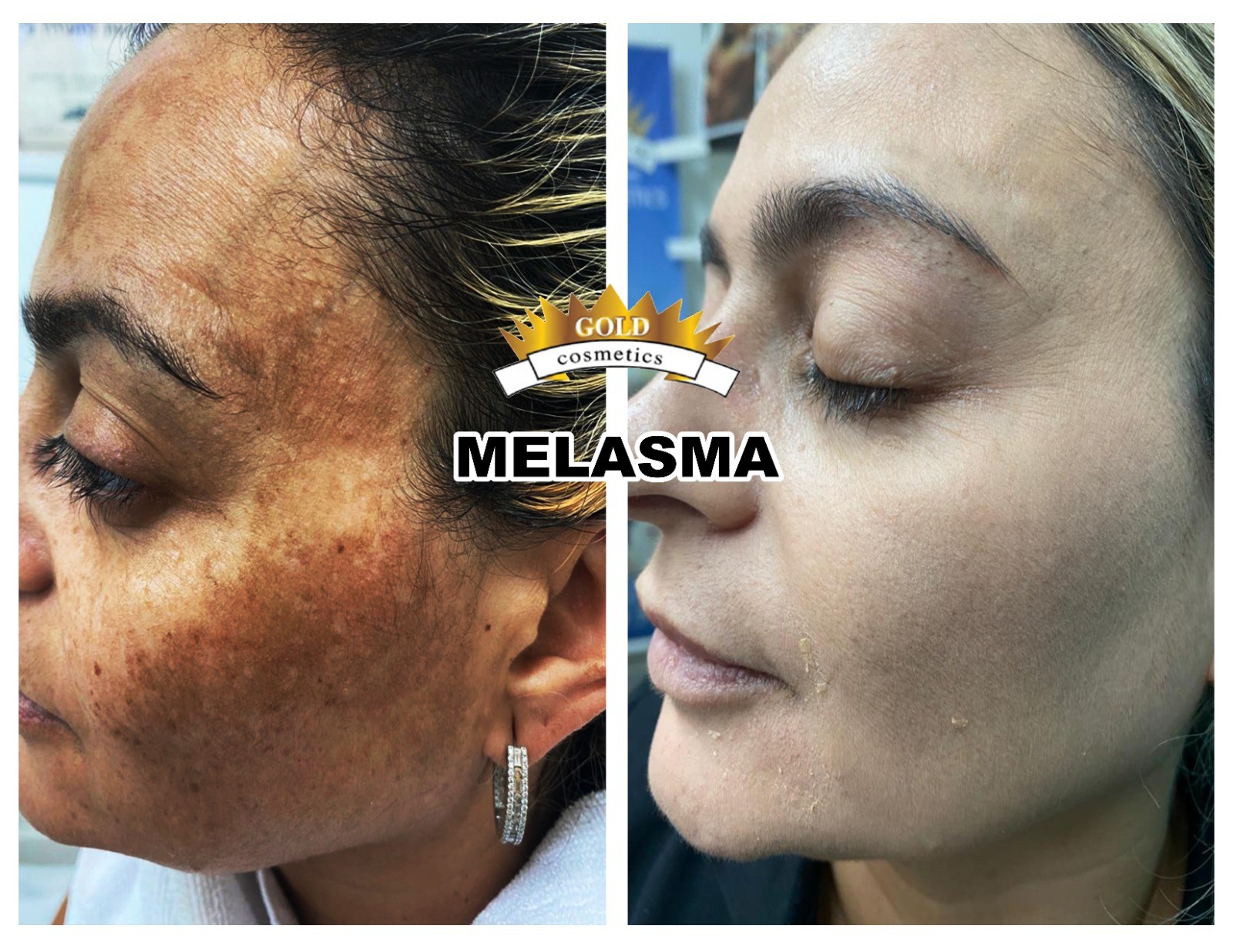
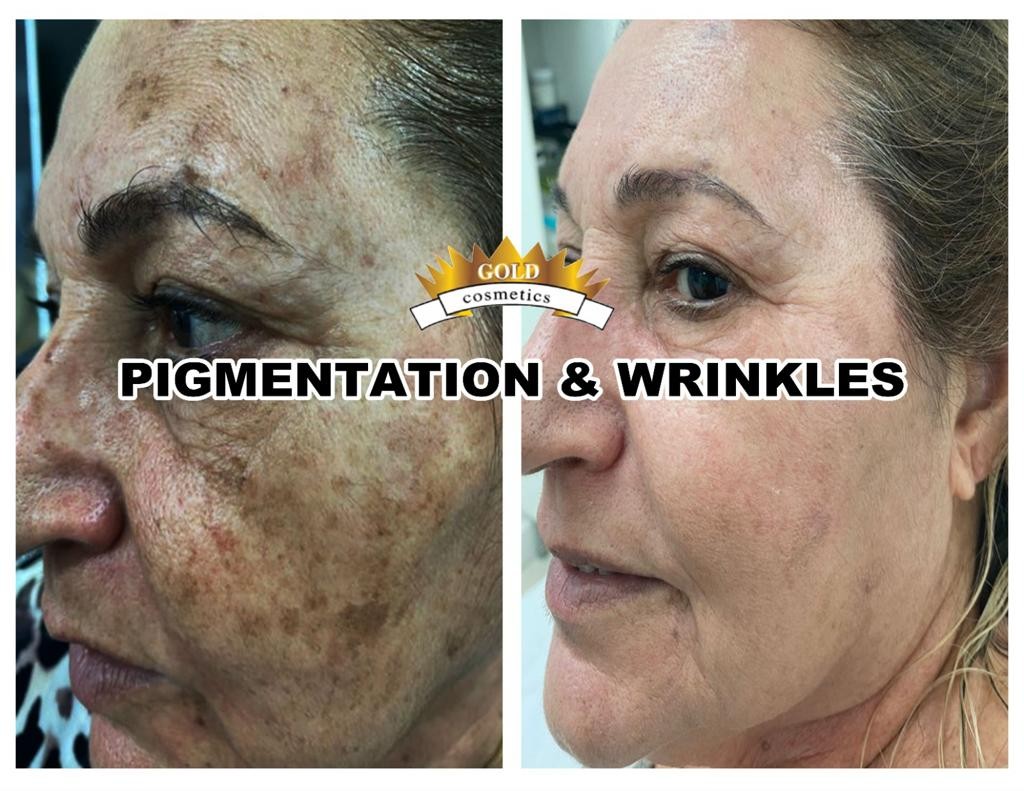
There are different types of Hyperpigmentation. It can appear as brown patches on the face, known as melasma. This type is usually caused by hormones or sun exposure. On the other hand, we have post-inflammatory hyperpigmentation, which results from inflamed acne, cuts, or skin injuries. Sunspots and Age spots occur as accumulated effects of sun damage over time. They are mostly prevalent around the face, hands, shoulders, or sun-exposed areas of the body.
Since most hyperpigmentation issues form due to excessive production of melanin. To effectively get rid of the resulting spots or patches, your skin requires ingredients that can interrupt the melanin production process. And this is where lightening actives like arbutin & hydroquinone come in as targeted treatments.
The Difference Between Arbutin and Hydroquinone
Having established most things about hyperpigmentation and its possible triggers. Now, let’s have a comparison breakdown of the two most effective ingredients for fighting it. We’ll be taking this comparison in sections.
-
Origin and Mode of Operation
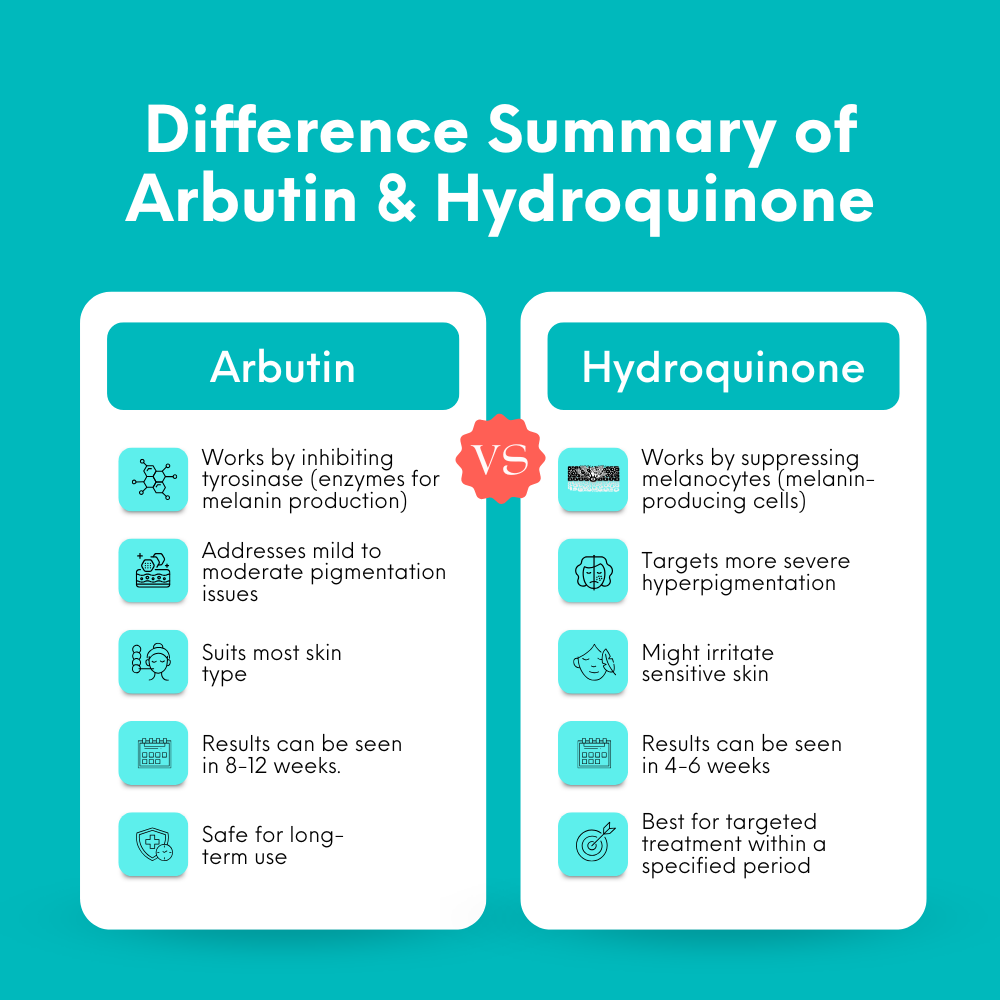
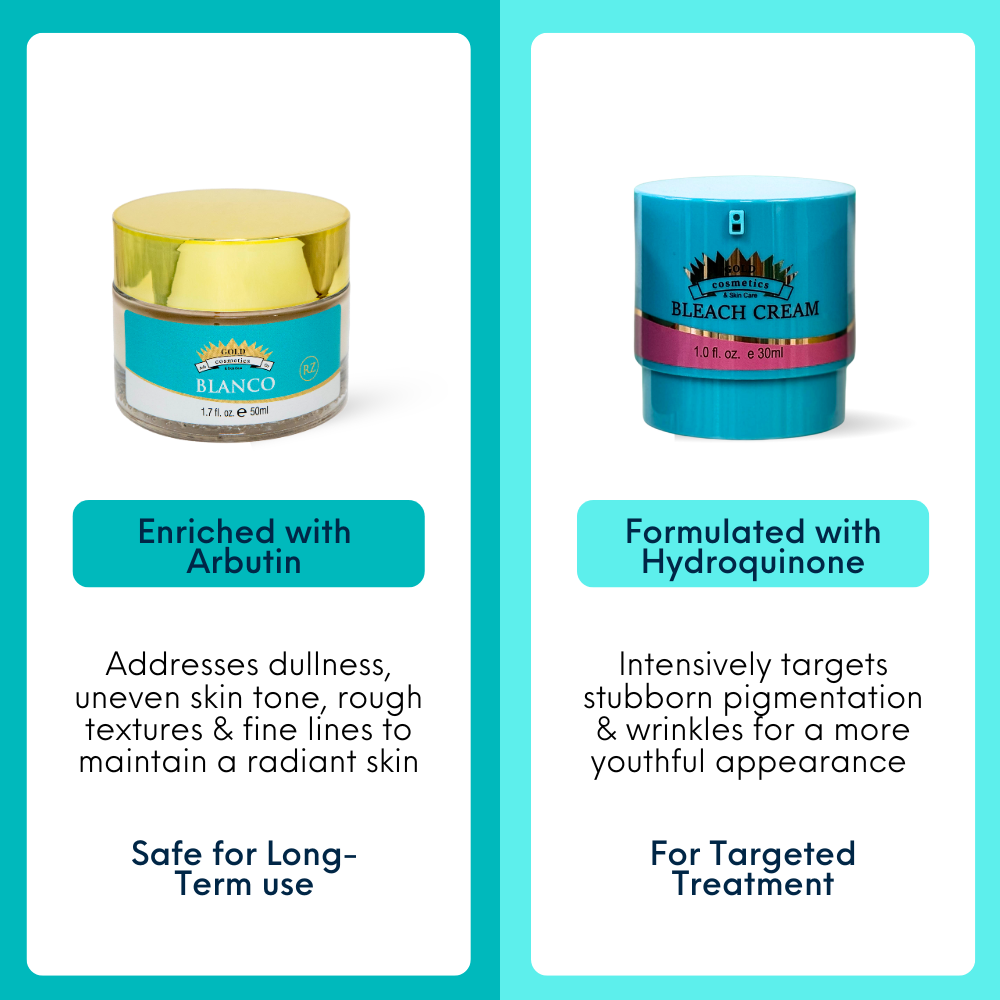
Commonly extracted from bearberry leaves, Arbutin works by gently inhibiting tyrosinase, which is the vital enzyme responsible for producing melanin. It slows down the pigment production process in a controlled manner, instead of shutting it down completely. This activity gradually fades the dark spots or patches. Due to its mild nature, arbutin is safe for long-term use. It can be found in serum, lotion, and creams, such as our Blanco Cream & Adir Clear. Products with arbutin can show visible results after 8 to 12 weeks of constant usage.
On the other hand, hydroquinone is chemically produced and offers a more direct approach. It brightens the skin by intensively suppressing the melanocytes, which are cells responsible for melanin production. This strong approach can even reduce the existing melanin pigments in the skin, thereby leading to fast, brightening results. Due to its potency, hydroquinone is usually recommended for severe melasma, stubborn hyperpigmentation, and chronic post-inflammatory marks. You can find hydroquinone in some skincare products, including our Bleach Cream. Unlike arbutin, products laced with hydroquinone provide faster results, 4-6 weeks of constant/monitored usage.
-
Safety, Risks, and Precautions
Arbutin remains a safer option when compared to its counterpart. Since it's mild in operation, it’s suitable for most skin types, including sensitive skin. It hardly causes redness, irritation, or peeling. Hence, it is a great long-term option for individuals with sensitive skin or first-time users of brightening formulas. Arbutin is still a safe bet for you if you’re pregnant or breastfeeding. That’s one of the reasons why we recommend Blanco Cream. The only side effects you may notice with arbutin are mild dryness in highly sensitive skin or slight tingling at initial use.
Unlike arbutin, hydroquinone has a longer list of side effects. It can cause skin irritation, dryness, redness, heightened sun sensitivity, rebound hyperpigmentation, etc. However, the most concerning risk is ochronosis. This is a condition where the skin develops a blue-black discoloration due to prolonged usage. Since hydroquinone offers a more aggressive approach, it requires careful monitoring and is only recommended for targeted treatments within a specific period. Individuals with darker skin tones may be at a higher risk of developing certain side effects of hydroquinone. Hence, we recommend using the ingredient under professional supervision.
-
Level of Suitability & Usage
Just like we’ve earlier stated, arbutin is safe for long-term use. And it’s best recommended for individuals with light to moderate hyperpigmentation issues. If you prefer a gentler approach in targeting your discolored patches, this should be your direction. Arbutin is also ideal for maintaining an even complexion after completing a more intensive hyperpigmentation treatment. Another amazing benefit of arbutin is its level of compatibility with other ingredients, such as vitamin C, niacinamide, & SPF. Consequently, this makes it easy to add it to your usual skincare regimen.
Comparatively, hydroquinone is best when it comes to addressing stubborn melasma or chronic hyperpigmentation marks that didn’t respond to milder treatments. It’s also a great option if you’re seeking a faster result, but we recommend doing that under the guidance of a licensed professional. However, at Gold Cosmetics, all our hydroquinone-laced products are professionally formulated to ensure the highest level of safety on your skin. You can also access how to use each of these products from their labels or our website. But should you encounter any questions while using them? Don’t hesitate to get in touch with experts online or at our facility.
Conclusion
The decision between choosing arbutin or hydroquinone in skincare regimens depends on individual preference, skin type, specific concern, or professional direction. While arbutin offers a milder approach with fewer possible side effects, Hydroquinone remains the best option for targeting highly chronic hyperpigmentation issues. However, regardless of the option you choose, consistent adherence to professional guidance is the key to achieving your desired radiant and even skin complexion. Also, never skip your sunblock with any of these two ingredients, as they can both increase sun sensitivity.
Are you struggling with any form of hyperpigmentation, and you’re not sure whether hydroquinone or arbutin is the right choice for you? Kindly click the button below to book our FREE consultation. And don’t forget to check our wide variety of Pigmentation Treatment Kits.
Not sure which kit is right for you? Click below to send us a photo of your skin issue for a free consultation
REAL PATIENTS, REAL RESULTS!