4 Reasons Why Melasma After 30 Is Hard to Treat
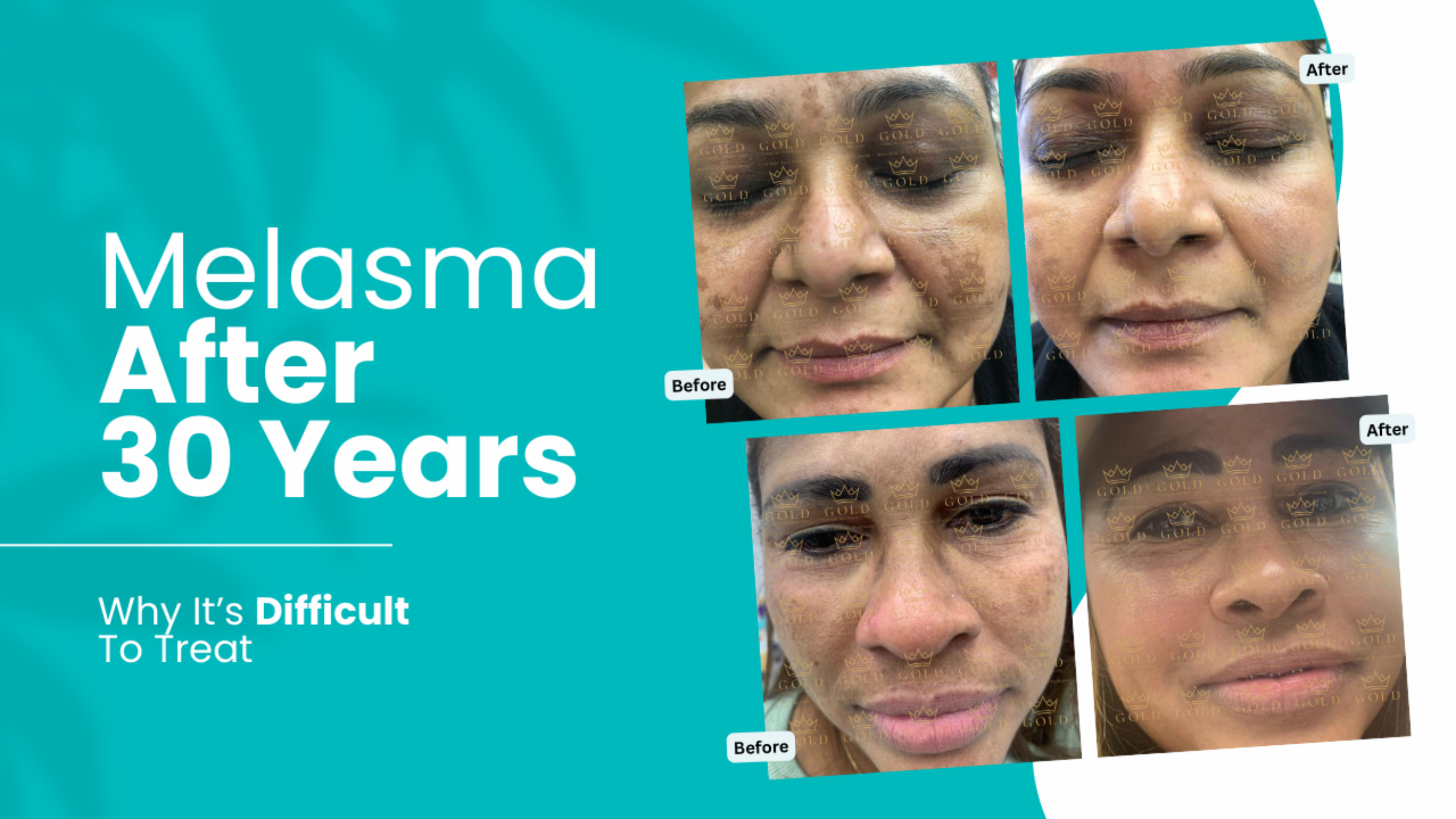
After 30, most people discover their skin no longer bounces back the way it has always done before when they were in their 20s or teens. For instance, they may experience difficulties in achieving a desired result when tackling hyperpigmentation issues like melasma. If you fall under this category and you’ve been wondering why those dark spots or discolored patches are taking time to clear from your skin, despite undergoing several treatments. Then, this blog is for you!
Typically, our skin’s biology changes as we age, with effects from external factors becoming more visible over time. So, by the time you enter your 30s, your skin must have experienced some changes, that includes its ability to heal from pigmentation issues. In this blog post, join us as we explore the four possible reasons why this happens and how you can help your skin regenerate. With the right understanding and targeted treatment, you’d be sure to regain your natural spotless looks in no time. Let’s get down to it.
1. Aging Skin
As we age, our skin’s natural regenerative ability begins to slow down, making it hard to shed dead or darkened skin cells that reflect as melasma. Formerly, your skin renews itself every 28 days when you were in your 20s. But now that you’ve entered your 30s, the turnover cycle can take 45 to 60 days. Hence, causing dead skin cells to stay longer at the surface. This delayed regeneration process traps pigmented cells, leading to more visible dark spots or discolored patches.
Another contributing factor to consider under aging skin is the accumulated effects from UV exposure and inconsistent use of sunblock. Accumulated effects from this habit tend to become more visible, starting from your late 20s. This extended UV exposure stimulates overproduction of melanin pigments, leading to more chronic pigmentation issues.
2. Hormonal Changes & Heat Sensitivity
Melasma is driven by 3 major triggers: UV exposure, heat, and hormones, especially in women. You can treat melasma today and see it reoccur tomorrow due to serious hormonal changes. So, it’s not your fault. At age 30 and above, most women experience hormonal fluctuations. Perimenopause may begin as early as your mid-30s, triggering decreased progesterone and changing progesterone. These continuous shifts can worsen your pre-existing melasma or trigger a new one around the cheeks, forehead, or upper lip.
On the other hand, pregnancy and contraceptives can also trigger hormonal changes, leading to reoccurrences of severe melasma or hyperpigmentation cases. More sensitivity to heat-induced pigmentation is another overlooked factor to consider when you’ve entered your 30s. At this stage, the skin can easily develop dark marks when overly exposed to heat from saunas, hot yoga, or when living in hot climates.
3. Bad Post-Inflammatory Hyperpigmentation
As we earlier stated, the skin slows down in its regenerative capability after 30. This depreciation can cause dark hyperpigmentation marks left behind from acne or skin injury to take longer times when fading. Thus, reducing your overall wound healing ability. Unfortunately, introducing more aggressive treatment to hasten the process can trigger more inflammation in the older skin, leading to severe melasma issues.
At this stage, your melasma or hyperpigmentation issues have a high rate of recurrence even after a successful treatment. Hence, this is why we recommend understanding how to manage your skin and prevent the dark pigmentation marks from spoiling your newly regained glow.
4. Bad Lifestyle & Poor Skincare Knowledge
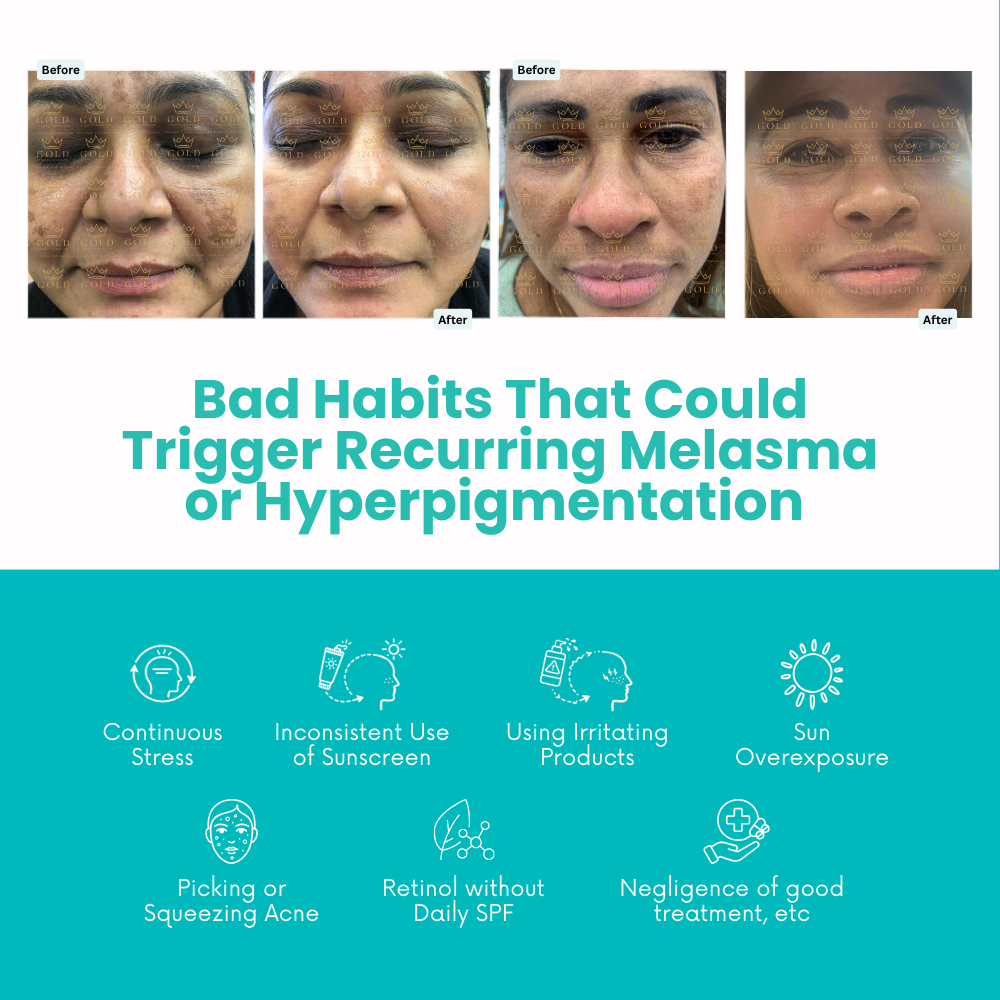
Poor lifestyle that can worsen or trigger your melasma to keep reoccurring includes: subjecting your body to continuous stress, inconsistent use of sunscreen, skipping moisturizers, using irritating skincare products, etc. Bad skincare knowledge can also put you at risk. For instance, using retinol (which heightens sun sensitivity) without SPF can trigger new dark spots on your skin within weeks. Picking or squeezing your acne can also lead to post-inflammatory hyperpigmentation.
Another bad skincare habit that could worsen your melasma is negligence. Not effectively addressing your pigmentation issue on time can affect your dermis. Please note this – while early-stage melasma can only affect the upper layer part of your skin (epidermis), long-established melasma cuts through and settles into the deeper skin layer (dermis). Once the dermis is affected, getting rid of the dark pigment may seem almost impossible with a regular cream. That’s why we recommend booking an appointment with a licensed esthetician or dermatologist if you’ve struggled with a melasma issue for years.
Wrapping Up
In conclusion, getting rid of melasma or hyperpigmentation issues can get harder as you advance in age. Having established some major reasons why this happens, it’s left for you to know where you need to make some changes for your skin. Aside from being sun-related, melasma can be chronic, hormonal, and heat-triggered. Successfully treating melasma or pigmentation marks in your 20s doesn’t mean the issue won’t reoccur when the wrong choices are made in your 30s. That’s why we advocate maintaining a healthy skincare habit and being committed to a quality skincare regimen. Consistency always beats aggression in skincare.
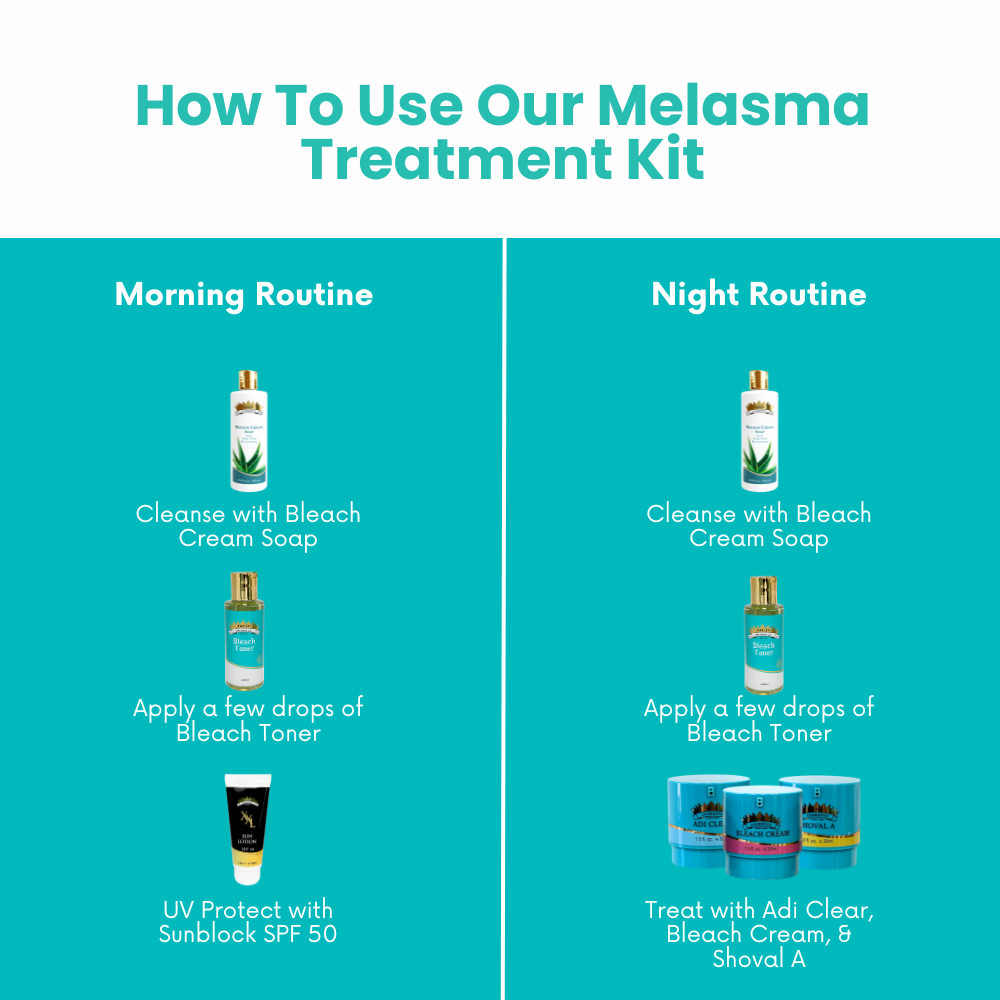
Finally, it’s worth noting that over-the-counter (OTC) products don’t always give the desired result when it comes to melasma or hyperpigmentation treatments. Best results usually come from adopting medical-grade skincare products and treatment from licensed professionals. At Gold Cosmetics, we offer a highly effective Melasma Treatment Kit, designed to restore your skin to its flawless appearance. Want to combine that with our expert treatment? Kindly click the button below to book a FREE consultation.
Not sure which kit is right for you? Click below to send us a photo of your skin issue for a free consultation
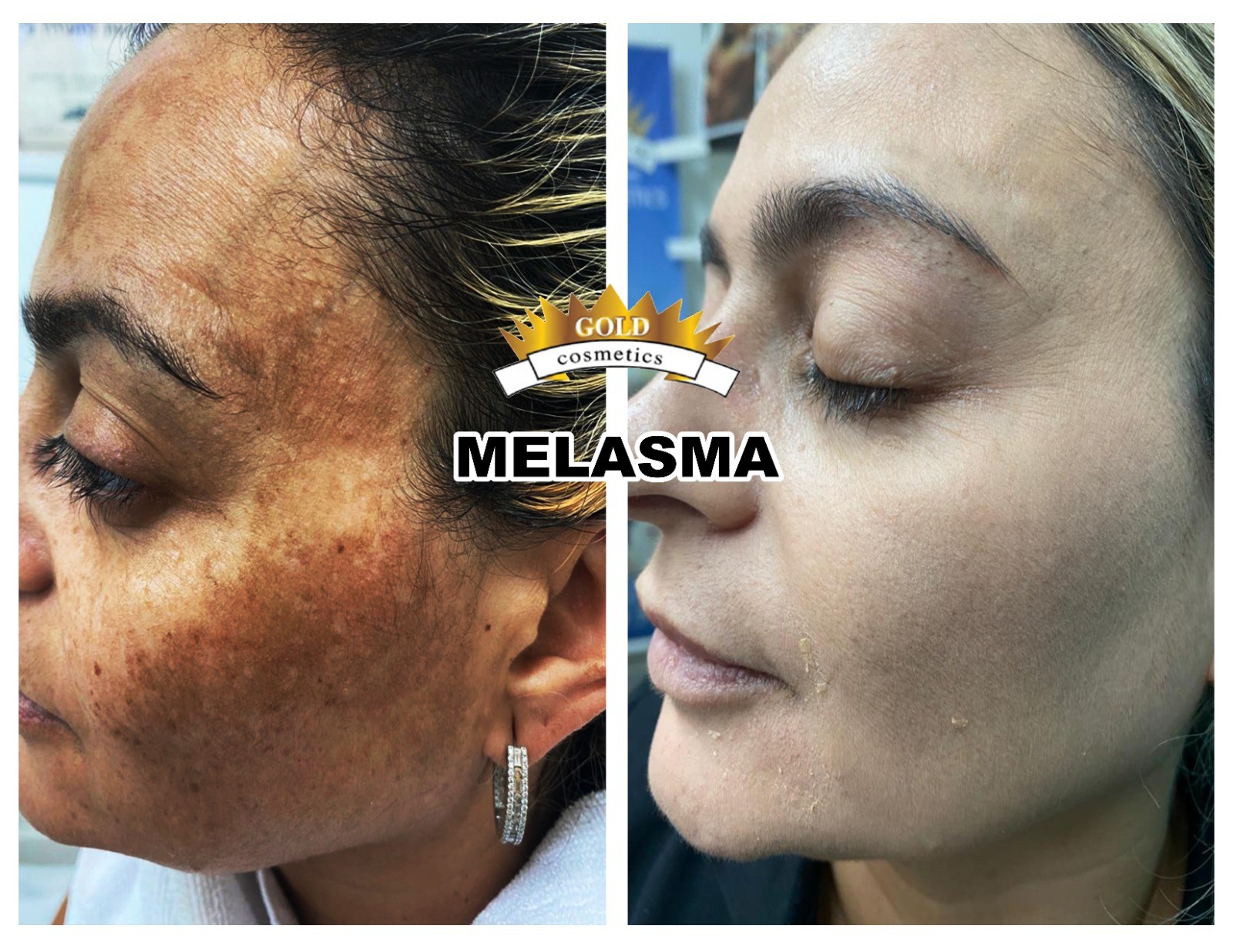
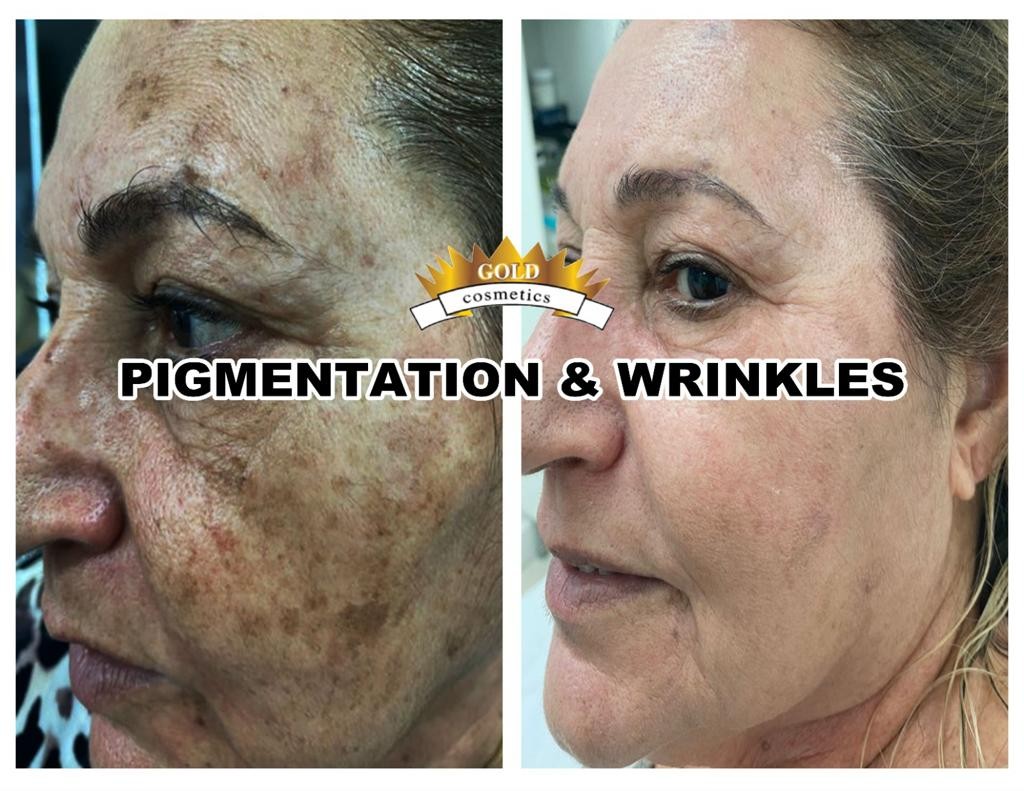
REAL PATIENTS, REAL RESULTS!